
Understanding how the Social Security Administration (SSA) evaluates medical conditions is the first step toward…

SSD Appeal Forms Mastery: Transform Your Denial into Approval with These 7 Proven Steps
Table of Contents
- Why SSD Appeal Forms Are Your Gateway to Benefits
- Understanding the Critical Types of SSD Appeal Forms
- Step 1: Master the 60-Day Filing Deadline
- Step 2: Choose the Correct Appeal Form for Your Situation
- Step 3: Gather Comprehensive Supporting Evidence
- Step 4: Complete Your SSD Appeal Forms with Precision
- Step 5: Strengthen Your Case with Updated Medical Documentation
- Step 6: Submit and Track Your Appeal Forms Properly
- Step 7: Execute Strategic Follow-Up Actions
- Avoiding Devastating Mistakes on Your SSD Appeal Forms
- Watch and Listen: Expand Your Understanding
- Master Your SSD Journey: Essential Reading
- Frequently Asked Questions
Why SSD Appeal Forms Are Your Gateway to Benefits
When the Social Security Administration (SSA) denies your initial disability claim, SSD appeal forms become your most powerful weapon for overturning that decision. Statistics reveal that approximately 65% of initial Social Security Disability applications face denial, but successful appeals can dramatically increase your chances of approval. Understanding how to properly complete these critical documents can mean the difference between financial hardship and receiving the benefits you rightfully deserve.
The complexity of SSD appeal forms often overwhelms applicants, leading to costly mistakes that can derail their cases entirely. However, with the right guidance and systematic approach to SSD and SSI appeals, you can transform your denial into an approval. This comprehensive guide will walk you through seven critical steps that have proven successful for countless Virginia residents seeking disability benefits.
Understanding the Critical Types of SSD Appeal Forms
Before diving into the completion process, you must understand the different types of SSD appeal forms available at each stage of the appeals process. The Social Security Administration provides specific forms for each level of appeal, and selecting the wrong form can result in automatic rejection of your case.
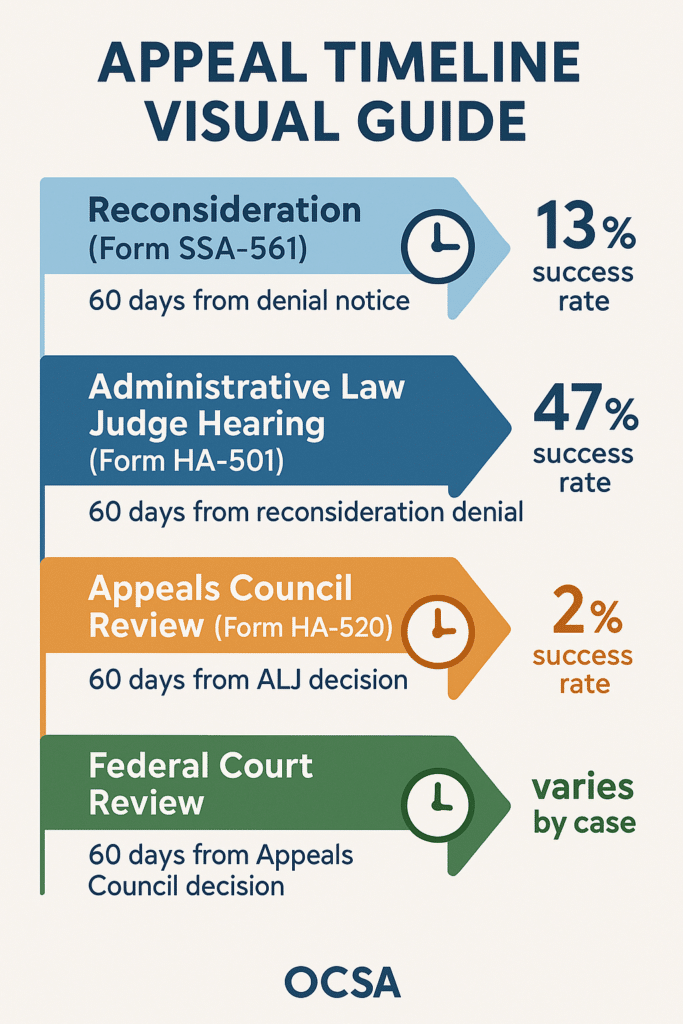
The most commonly used SSD appeal forms include the Request for Reconsideration (SSA-561), Request for Hearing by Administrative Law Judge (HA-501), and Request for Review of Hearing Decision/Order (HA-520). Each form serves a specific purpose and requires different supporting documentation to maximize your chances of success.
Step 1: Master the 60-Day Filing Deadline
The foundation of any successful appeal begins with understanding the strict timing requirements for submitting your SSD appeal forms. The SSA provides exactly 60 days from the date you receive your denial notice to file your appeal. This deadline is absolute, and missing it typically results in having to restart the entire application process from the beginning.
However, the 60-day rule contains important nuances that many applicants overlook. The SSA assumes you received your denial notice five days after the date printed on the document, giving you effectively 65 days to submit your appeal. Additionally, if the 60th day falls on a weekend or federal holiday, you have until the next business day to file your SSD appeal forms.
To protect yourself from missed deadlines, implement these proven strategies:
– Mark your calendar immediately upon receiving any SSA correspondence
– Set multiple reminders on your phone and computer
– Submit your appeal at least one week before the deadline
– Always request a receipt or confirmation when submitting forms
– Consider using certified mail for paper submissions
The importance of timing cannot be overstated. Late submissions face an uphill battle for acceptance, requiring you to demonstrate “good cause” for the delay, which the SSA rarely accepts. According to the Social Security Administration’s appeals guidelines, protecting your appeal rights starts with meeting all deadlines.
Step 2: Choose the Correct Appeal Form for Your Situation
Selecting the appropriate SSD appeal forms depends entirely on which stage of the appeals process you’re entering and the type of benefits you’re seeking. Using the wrong form can delay your case by months or even result in dismissal of your appeal.
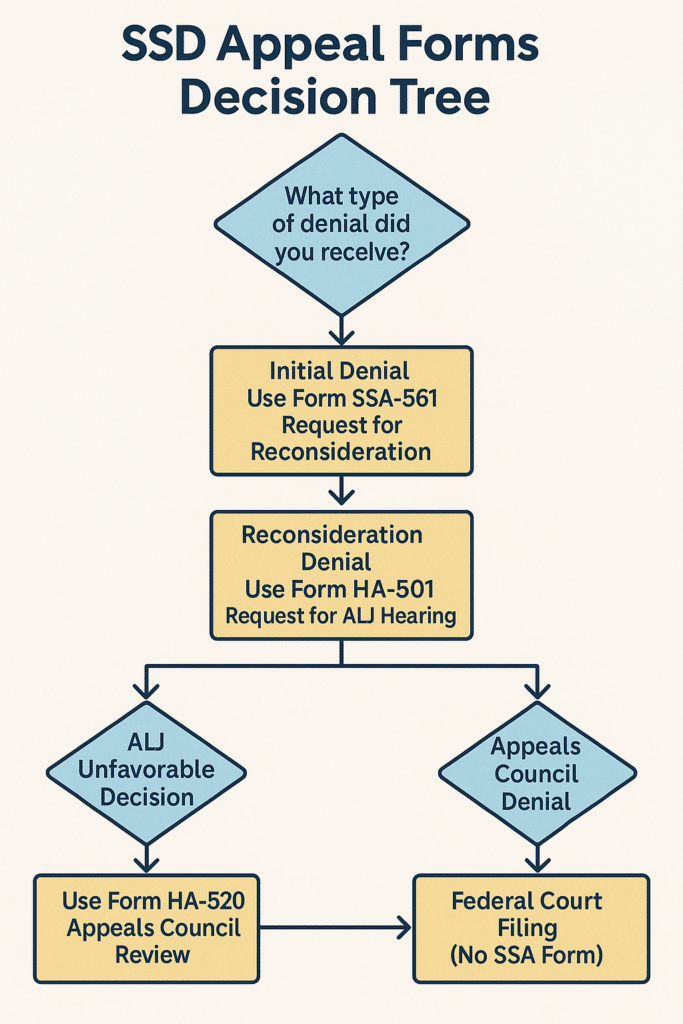
For initial denials, Form SSA-561 (Request for Reconsideration) is your starting point. This form allows you to request a complete review of your case by a different examiner who wasn’t involved in the original decision. The reconsideration process provides an opportunity to submit additional medical evidence and correct any errors in your initial application.
When your reconsideration faces denial, Form HA-501 (Request for Hearing by Administrative Law Judge) becomes your next tool. This form initiates the hearing process, where you’ll present your case before an Administrative Law Judge who has the authority to overturn previous decisions.
Step 3: Gather Comprehensive Supporting Evidence
The strength of your SSD appeal forms depends heavily on the quality and comprehensiveness of your supporting evidence. Simply resubmitting the same documentation that led to your initial denial rarely results in approval. Instead, you must gather new, compelling evidence that addresses the specific reasons for your denial.
Start by carefully reviewing your denial notice to understand exactly why the SSA rejected your claim. Common reasons include insufficient medical evidence, lack of severe impairment, or determination that you can perform other work. Each reason requires a targeted response with specific types of evidence.
Medical evidence forms the cornerstone of successful appeals. Gather all medical records from the date of your last submission, including:
– Updated treatment notes from all healthcare providers
– New diagnostic test results (MRIs, CT scans, blood work)
– Specialist consultations and evaluations
– Physical therapy records and progress notes
– Mental health treatment documentation
– Prescription medication lists and dosage changes
Beyond medical records, functional evidence can significantly strengthen your SSD appeal forms. This includes statements from family members, friends, former employers, and anyone who can describe how your condition affects your daily activities and ability to work.
Step 4: Complete Your SSD Appeal Forms with Precision
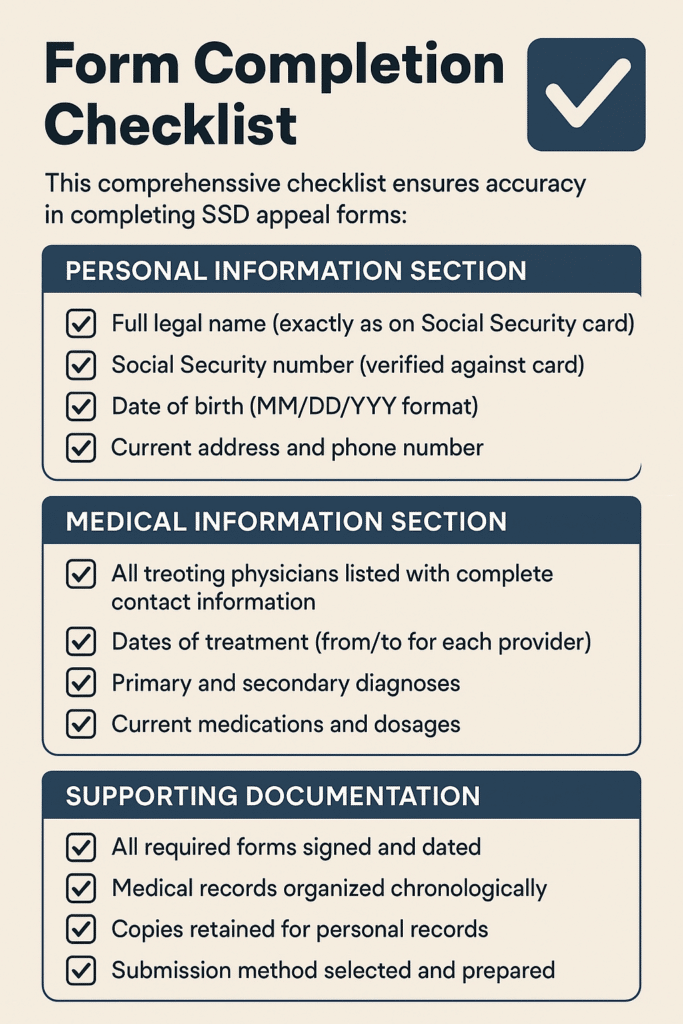
The actual completion of your SSD appeal forms requires meticulous attention to detail and strategic thinking about how to present your case most effectively. Every section of these forms provides an opportunity to strengthen your appeal, but careless mistakes can undermine even the strongest cases.
Begin by reading the entire form before writing anything. Understanding the full scope of information requested allows you to plan your responses strategically and avoid contradictions between different sections. Use black ink for paper forms or ensure your computer has reliable internet connectivity for online submissions.
When completing identifying information, ensure perfect consistency with your original application. Any discrepancies in names, Social Security numbers, or dates can cause processing delays. Double-check all numbers and dates against your original documents.
The narrative sections of your SSD appeal forms deserve special attention. These areas allow you to explain in your own words how your condition has worsened or how new evidence supports your claim. Focus on specific examples of functional limitations rather than general statements about pain or discomfort.
Step 5: Strengthen Your Case with Updated Medical Documentation
Fresh medical documentation can transform weak SSD appeal forms into compelling cases for approval. The SSA places tremendous weight on recent medical evidence, particularly when it demonstrates progression of your condition or new impairments that weren’t present during your initial application.
Schedule appointments with all your treating physicians specifically to discuss your disability claim. Many doctors don’t fully understand how their documentation affects SSA decisions, so educate them about the importance of describing functional limitations rather than just listing diagnoses.
Request that your physicians complete detailed narrative reports describing how your condition affects your ability to:
– Sit, stand, and walk for extended periods
– Lift, carry, push, and pull objects
– Concentrate and maintain attention
– Interact appropriately with supervisors and coworkers
– Adapt to workplace changes and stressors
Consider obtaining independent medical examinations from specialists who understand disability evaluations. These physicians can provide objective assessments that complement your treating physician’s records and strengthen your SSD appeal forms.
Step 6: Submit and Track Your Appeal Forms Properly
The method you choose for submitting your SSD appeal forms can significantly impact your case’s success. While online submission offers convenience and immediate confirmation, paper submissions sometimes allow for more comprehensive supporting documentation.
For online submissions, create an account at the SSA’s website and carefully follow all prompts. The system will provide immediate confirmation of receipt and assign a confirmation number. Print and save this confirmation as proof of timely filing.
Paper submissions require more careful handling but offer certain advantages. You can include extensive supporting documentation and ensure everything reaches the SSA together. Use certified mail with return receipt requested to establish proof of delivery and timing.
Regardless of your submission method, maintain detailed records of everything you submit. Create a master file containing copies of all SSD appeal forms, supporting documentation, and correspondence with the SSA. This organization will prove invaluable if questions arise about your submission.
Step 7: Execute Strategic Follow-Up Actions
Submitting your SSD appeal forms marks the beginning, not the end, of your appeal process. Strategic follow-up actions can significantly improve your chances of success and help you avoid common pitfalls that derail appeals.
Within two weeks of submission, contact the SSA to confirm receipt of your appeal. While you should have confirmation from your submission method, verifying that your case has entered the system prevents costly delays. Request the name and contact information of the examiner assigned to your case.
Monitor your case status regularly through the SSA’s online portal or by calling their customer service line. Stay alert for any requests for additional information or scheduled appointments. Missing a consultative examination or failing to provide requested documentation can result in automatic denial of your appeal.
Continue gathering supporting evidence throughout the appeals process. New medical records, updated physician statements, and additional functional assessments can strengthen your case even after submission of your initial SSD appeal forms.
Avoiding Devastating Mistakes on Your SSD Appeal Forms
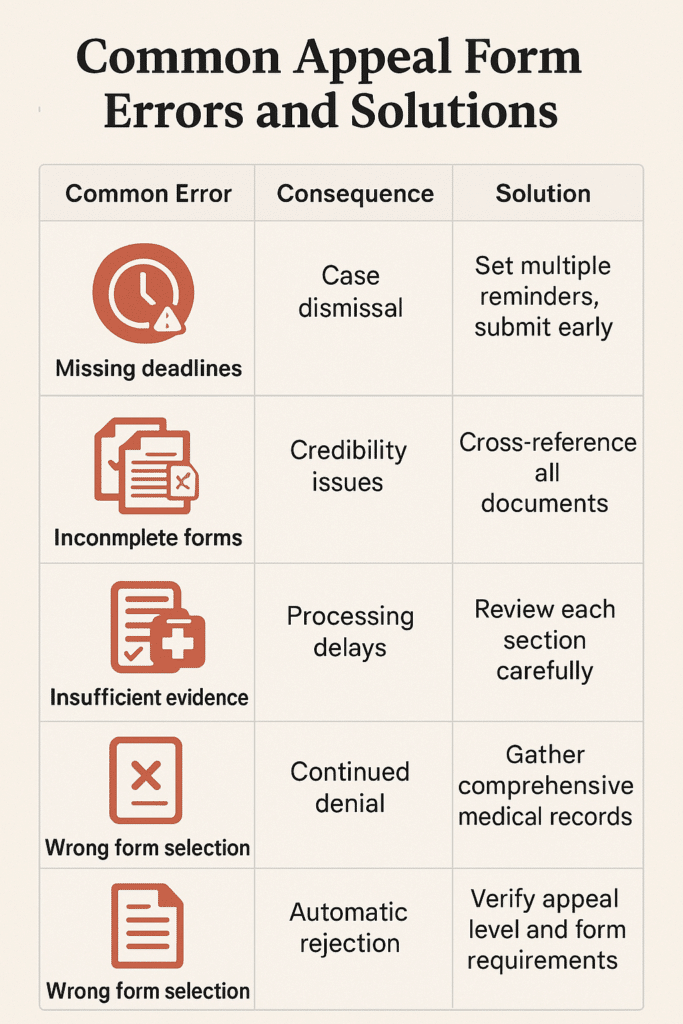
Even minor errors on your SSD appeal forms can derail your entire appeal, making it crucial to understand and avoid the most common mistakes that lead to denials. These errors often stem from misunderstanding the SSA’s requirements or rushing through the completion process.
One of the most frequent mistakes involves inconsistent information between your appeal forms and original application. The SSA carefully compares all documentation, and any discrepancies raise red flags that can lead to credibility questions. Always review your original application before completing appeal forms to ensure consistency in dates, medical providers, and symptom descriptions.
Another critical error involves failing to address the specific reasons for your denial. Many applicants simply resubmit the same information that led to their initial denial, hoping for a different result. Instead, carefully analyze your denial notice and specifically address each reason with new evidence or clarification.
Watch and Listen: Expand Your Understanding
Mastering SSD Appeal Forms: Expert Strategies for Success
Dive deeper into the complexities of completing SSD appeal forms with our comprehensive podcast episode featuring experienced disability attorneys and former SSA employees. This audio resource provides insider insights into what examiners look for when reviewing appeals and shares real-world examples of successful form completion strategies. Whether you’re commuting, exercising, or handling household tasks, you can absorb valuable knowledge that could make the difference in your appeal’s outcome. Listen to learn advanced techniques for presenting your case effectively and avoiding the subtle mistakes that often lead to denials.
From Denial to Approval: Real Stories of SSD Appeal Success
Experience the journey from denial to approval through compelling interviews with Virginia residents who successfully navigated the SSD appeals process. These authentic stories reveal the challenges, strategies, and emotional aspects of appealing disability denials, providing both inspiration and practical guidance for your own case. Our guests share specific details about how they completed their appeal forms, what evidence proved most valuable, and how they maintained hope throughout the lengthy process. This podcast offers the encouragement and practical wisdom you need to persist through your own appeal journey.
Master Your SSD Journey: Essential Reading
Unlock the Secrets of SSD Appeal Success
Before diving deeper into your appeal strategy, discover the critical factors that can make or break your case. Our comprehensive guide on Key Evidence to Strengthen Your SSD Appeal: 7 Powerful Tactics for a Winning Claim reveals the specific types of documentation that SSA examiners find most compelling. This essential resource complements your form completion efforts by ensuring you gather the right evidence to support your appeal. Learn which medical records carry the most weight, how to obtain powerful supporting statements, and the strategic timing for submitting additional evidence throughout your appeal process.
Frequently Asked Questions
What happens if I miss the 60-day deadline for submitting my SSD appeal forms?
Missing the 60-day deadline typically requires you to restart the entire application process from the beginning. However, you can request an extension by demonstrating “good cause” for the delay, such as serious illness or failure to receive the denial notice. The SSA rarely grants these extensions, making it crucial to submit your appeal forms well before the deadline.
Can I submit additional evidence after filing my SSD appeal forms?
Yes, you can and should continue submitting relevant evidence throughout the appeals process. The SSA accepts additional medical records, updated physician statements, and new test results until your case receives a final decision. However, submitting comprehensive evidence with your initial appeal forms strengthens your case from the start.
Do I need a lawyer to complete my SSD appeal forms?
While you can complete SSD appeal forms independently, attorney representation significantly increases your chances of success. Disability attorneys understand the complex requirements, can identify weaknesses in your case, and know how to present evidence most effectively. Most disability attorneys work on contingency, meaning they only get paid if you win your case.
How long does the SSD appeals process take after submitting my forms?
The timeline varies significantly depending on the appeal level and local office workload. Reconsideration typically takes 3-6 months, while Administrative Law Judge hearings can take 12-18 months or longer. Appeals Council reviews and Federal Court cases can extend the process by additional years.
What should I do if the SSA requests additional information after I submit my SSD appeal forms?
Respond promptly and completely to any SSA requests for additional information. Missing these deadlines can result in automatic denial of your appeal. If you don’t understand what’s being requested, contact the SSA immediately for clarification or consult with a disability attorney.
Can I work while my SSD appeal is pending?
You can work while your appeal is pending, but earning above the substantial gainful activity (SGA) limit may harm your case. The SSA may view work activity as evidence that you’re not disabled. Consult with a disability attorney before returning to work during the appeals process.
At Harbison & Kavanagh, we are dedicated to helping you navigate the SSDI application and appeals process. If you believe you qualify for SSDI and have questions, call us today at (804) 888-8000, or visit our contact page to schedule a free consultation. Our experienced lawyers are here to provide the support and guidance you need.
Related Posts