Understanding how the Social Security Administration (SSA) evaluates medical conditions is the first step toward…
SSD/SSI Appeals Process Medical Expert: 5 Vital Strategies for a Winning Testimony
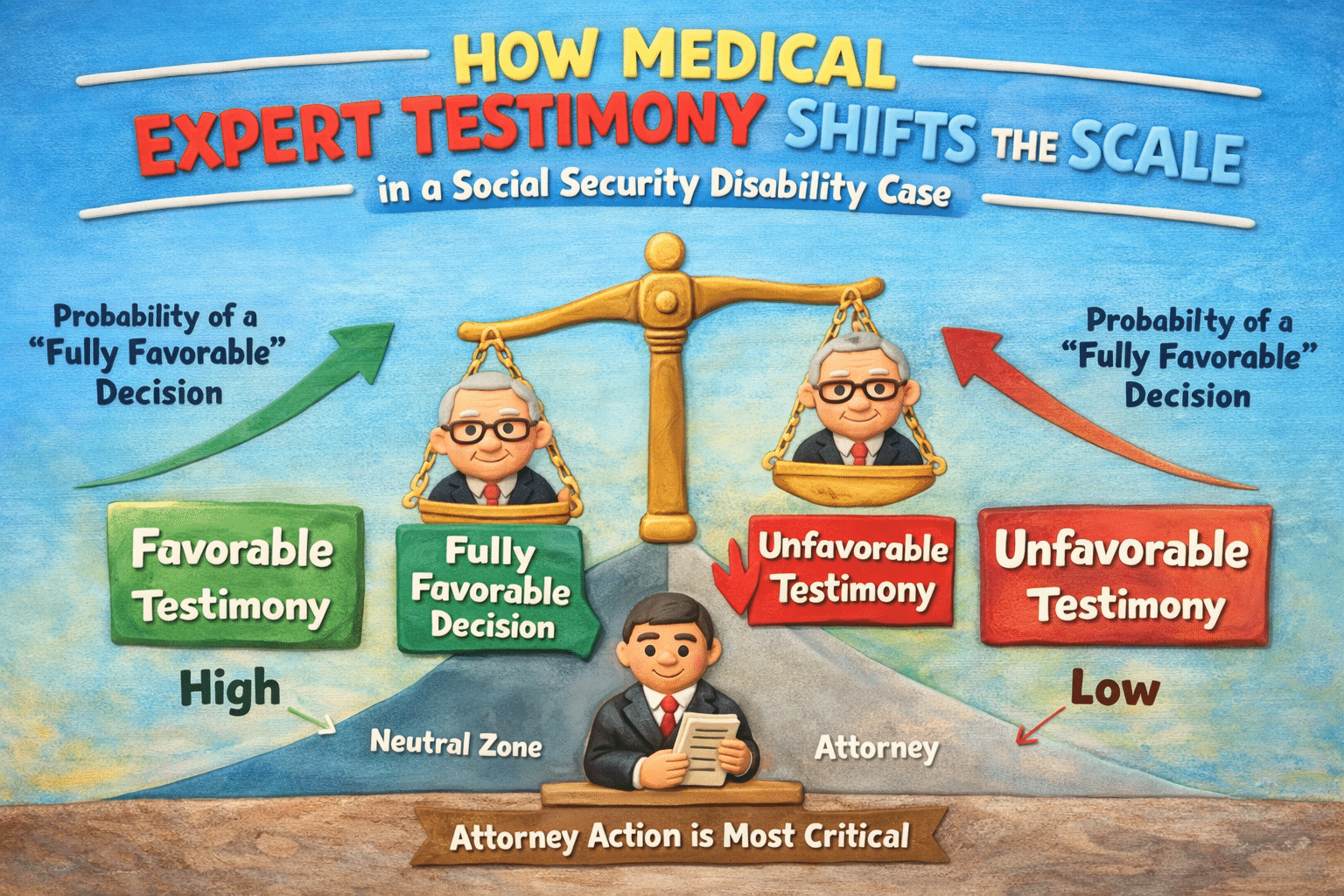
When you are navigating the SSD/SSI appeals process medical expert testimony can be the deciding factor between a successful award of benefits and a frustrating denial. Data from the U.S. Government Accountability Office (GAO) suggests a strong correlation between the presence and content of Medical Expert (ME) testimony and the final decision rendered by an Administrative Law Judge (ALJ). While these experts are intended to be impartial, their interpretation of your medical records can either validate your struggle or create significant hurdles for your claim in Virginia and throughout the Southeast.
At Harbison & Kavanagh, we understand that a hearing is the most critical stage of the SSD/SSI appeals process medical expert interaction. Often, these experts may engage in “cherry-picking”—focusing on a single “good day” in your records while ignoring months of debilitating symptoms. To counter this, we utilize strategic pre-hearing submissions and aggressive live cross-examination to ensure the judge sees the full, authentic picture of your disability.
Table of Contents
- Understanding the Medical Expert’s Role
- How Medical Experts Help Your Case
- When Expert Testimony Can Hurt Your Claim
- The Science of Medical Equivalency and Listings
- How We Prepare You for the SSD/SSI Appeals Process Medical Expert
- The Art of Cross-Examination: Neutralizing Negative Testimony
- Virginia-Specific Insights for Disability Hearings
- Watch and Listen: Expand Your Understanding
- Deep Dive: Related Disability Resources
- Frequently Asked Questions
Understanding the Role of the SSD/SSI Appeals Process Medical Expert
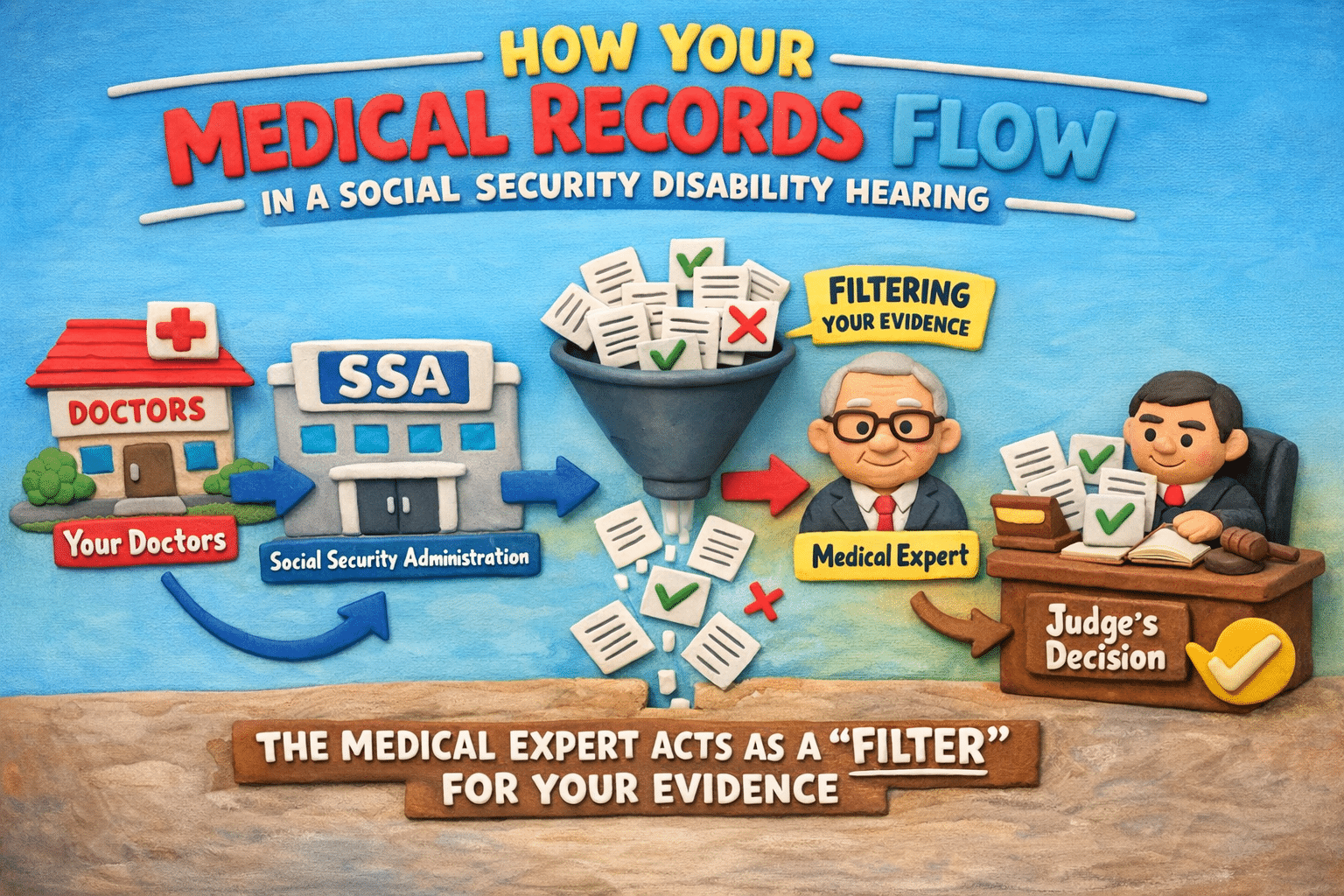
The SSD/SSI appeals process medical expert is typically a physician, psychologist, or other specialist contracted by the Social Security Administration (SSA). They do not examine you physically. Instead, their job is to review your “paper file”—the hundreds or thousands of pages of medical records you have accumulated—and provide an “impartial” opinion to the judge.
Their testimony usually focuses on two main areas: 1. Medical Equivalence: Does your condition meet or equal one of the “Listings” in the SSA’s Blue Book? 2. Residual Functional Capacity (RFC): Based on the evidence, what are the maximum physical or mental activities you can still perform in a work environment?
In Virginia, where the SSD/SSI appeals process medical expert is frequently used in complex cases involving spinal injuries, autoimmune disorders, or mental health, their word carries immense weight. If the expert testifies that you can perform sedentary work, the judge is highly likely to follow that recommendation unless your attorney can provide a compelling rebuttal.
The Path of Medical Evidence in an Appeal
How Medical Experts Help Your Case
It is a common misconception that the SSD/SSI appeals process medical expert is always an adversary. In many instances, a knowledgeable expert can be your greatest ally. This is particularly true when your treating physician’s notes are disorganized or use non-standard terminology that the judge doesn’t immediately recognize as “disabling.”
A favorable ME can: Confirm Objective Findings: They can explain complex MRIs, CT scans, or laboratory results to the judge, confirming that your pain has a verifiable medical basis. Establish “Grid Rule” Eligibility: For claimants over age 50 in Virginia, the expert’s testimony on your physical limitations can trigger the Medical-Vocational Guidelines, which may allow for a finding of disabled even if you can do some light work.
By effectively managing the SSD/SSI appeals process medical expert, your legal team ensures the expert acknowledges the severity and persistence of your symptoms. We often guide the expert back to specific pages in the record that demonstrate long-term treatment failure, which strengthens your credibility in the eyes of the court.
When Expert Testimony Can Hurt Your Claim
The danger arises when an expert relies on outdated interpretations of medical science or overlooks the cumulative effect of multiple “mild” impairments. In the SSD/SSI appeals process medical expert testimony, a doctor might state that because you can lift ten pounds, you are capable of full-time work. However, they may fail to account for the fact that your medication causes extreme fatigue or that your condition flares up three days a week.
Common ways an expert can hurt your case include: Stating Your Condition is “Controlled”: They may see a note saying you felt “better” after one appointment and conclude the condition is no longer disabling. Ignoring Mental Health Components: A physical health expert might ignore the anxiety or depression that often accompanies chronic pain, leading to an incomplete RFC.
This is why having an experienced Social Security disability representative is non-negotiable. We are trained to identify when an expert is deviating from SSA regulations and to object on the record to protect your right to a fair hearing.
Impact of Expert Testimony on Claim Outcomes
The Science of Medical Equivalency and Listings
To win a claim during the SSD/SSI appeals process medical expert review often involves Step 3 of the Sequential Evaluation Process: Determining if your condition “meets or medically equals” a listing. This is a purely clinical determination. If the ME testifies that you meet a listing (such as 1.15 for disorders of the skeletal spine or 12.04 for depressive disorders), the hearing effectively ends with a win for you.
However, “medical equivalency” is a high bar. It requires showing that your impairment is at least equal in severity and duration to the criteria in the listings. A medical expert might argue that while you have the symptoms, you lack the specific “objective” findings—like a specific type of nerve root compression—required by the Blue Book. Our role is to find alternative evidence (such as functional limitations) that allows the SSD/SSI appeals process medical expert to concede that your condition is “functionally equivalent” to the listing.
How We Prepare You for the SSD/SSI Appeals Process Medical Expert
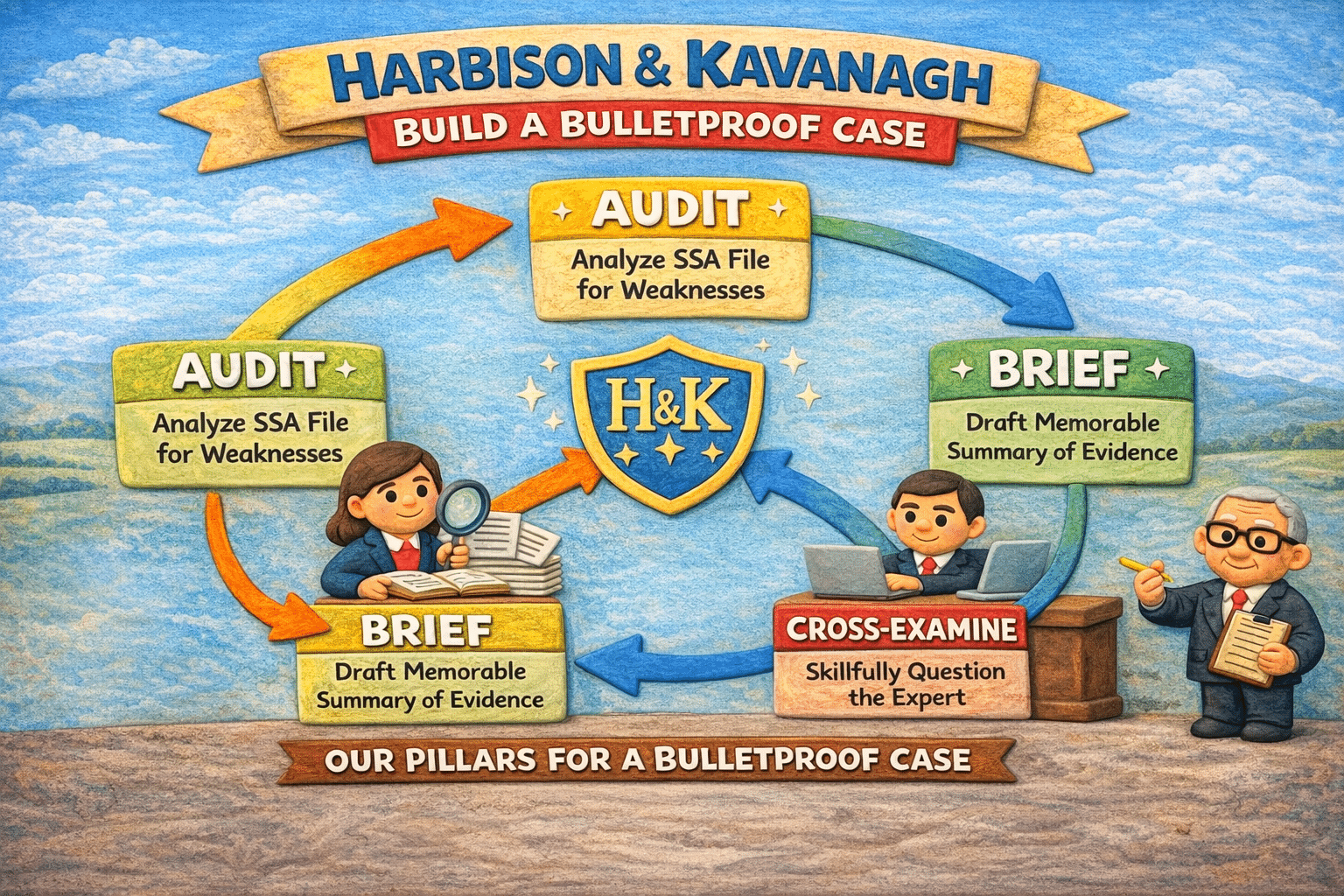
Preparation is the foundation of success. We don’t just show up to the hearing and hope for the best. Our approach to the SSD/SSI appeals process medical expert involves a multi-step strategy designed to neutralize threats and capitalize on opportunities.
1. Comprehensive Record Review
We audit your file months before the hearing. If there are gaps in your treatment, we help you fill them. We ensure that every diagnostic test and specialist report is in the hands of the ME before they even begin their review. This prevents them from claiming “insufficient evidence” to support your limitations.
2. The Pre-Hearing Brief
We submit a detailed legal memorandum to the judge and the ME. This brief outlines exactly why you meet a listing or why your RFC is so limited that no jobs exist for you. By setting the narrative early, we frame the expert’s focus on the most critical evidence.
3. Direct Cross-Examination
During the hearing, we have the right to question the ME. If the expert gives an unfavorable opinion, we use hypothetical questions to force them to acknowledge your limitations. For example, “Doctor, if the claimant must lie down for two hours a day due to pain, would they still be able to maintain the RFC you suggested?” A “No” from the doctor can win your case.
The 3-Step Preparation Framework
The Art of Cross-Examination: Neutralizing Negative Testimony
The most confrontational part of the hearing occurs during cross-examination. When an SSD/SSI appeals process medical expert suggests you can work, they are making a judgment that could cost you years of backpay and future stability. Our attorneys are trained to dismantle flawed expert opinions through several proven tactics:
Exposing Contradictions: If the ME says you can stand for six hours, we point to the physical therapy notes where you collapsed after ten minutes. By forcing the expert to reconcile their opinion with your actual medical history, we often get them to “re-evaluate” their RFC on the spot.
Questioning the Scope of Expertise: Sometimes, the SSA hires a general practitioner to testify on a complex neurological or psychiatric issue. We aren’t afraid to question the expert’s familiarity with the latest clinical guidelines for your specific rare disease. If the SSD/SSI appeals process medical expert isn’t qualified to speak on your condition, their testimony should be given less weight.
Focusing on “Consistency”: Under the new SSA evidence rules, the “consistency” and “supportability” of a medical opinion are the most important factors. We demonstrate to the judge that the expert’s negative opinion is inconsistent with the longitudinal record of your treating specialists.
Virginia-Specific Insights for Disability Hearings
While Social Security is a federal program, the Office of Hearing Operations (OHO) locations in Richmond, Norfolk, Roanoke, and Charlottesville have their own nuances. Understanding the local pool of SSD/SSI appeals process medical experts used in Virginia gives our clients a distinct advantage. We know which experts tend to be more conservative and which ones are more open to considering “subjective” symptoms like pain and fatigue.
Furthermore, as we expand our reach into neighboring states like North Carolina and Maryland, we maintain a vast database of expert testimonies. This allows us to spot patterns in an expert’s testimony across different cases, giving us the leverage needed to challenge inconsistencies. In the SSD/SSI appeals process medical expert field, knowing the expert’s “history” is just as important as knowing your own medical history.
The Regional Impact of Expert Testimony

Watch and Listen: Expand Your Understanding
We understand that the legal complexities of the disability system can be overwhelming to read all at once. To help you digest this information on the go, we have developed a dedicated audio and video resource. This convenient format allows you to listen to our legal experts break down the SSD/SSI appeals process medical expert role while you are commuting, exercising, or relaxing at home. Our podcast features exclusive interviews and deep-dive insights into how we handle live cross-examinations and the tactics used to protect your benefits. We highly encourage you to listen and empower yourself with the knowledge needed for your upcoming hearing.
Mastering Your Disability Hearing
Getting ready for your day in court involves more than just understanding the medical experts. To ensure you are fully prepared for every curveball the judge might throw, you should review our comprehensive guide on the types of questions you will face. This resource is the perfect companion to the article you’ve just read and will help you feel confident and prepared.
Questions Asked During SSD Hearings: A Complete Guide
Frequently Asked Questions
Can I choose which medical expert attends my hearing?
No. The Social Security Administration assigns the expert based on their specialty and availability. However, your attorney can object to a specific expert if there is a documented conflict of interest or if the expert lacks the proper credentials for your specific condition.
What if the medical expert has never seen me in person?
This is standard for the SSD/SSI appeals process medical expert. They are “non-examining” sources. Their opinion is based entirely on your medical records. This is why it is vital to have consistent, detailed treatment notes from your own doctors to counteract any gaps in the ME’s review.
Can the judge ignore what the medical expert says?
The judge is not legally required to follow the ME’s opinion, but they must provide a logical explanation if they choose to deviate from it. If an expert gives a favorable opinion and the judge ignores it without a good reason, that is often strong grounds for an appeal to the Appeals Council.
Does a medical expert always show up at the hearing?
No. Judges usually only call an ME if the medical evidence is highly complex, if there is a question about whether you “meet a listing,” or if your symptoms are not clearly explained by the existing records. In many Virginia disability hearings, only a Vocational Expert (VE) is present.
How long does the expert’s testimony usually last?
Typically, the ME’s portion of the hearing lasts between 15 and 30 minutes. This includes the judge’s questions and your attorney’s cross-examination. While short, these minutes are often the most consequential part of the entire SSD/SSI appeals process.
At Harbison & Kavanagh, we are dedicated to helping you navigate the SSDI application and appeals process. If you believe you qualify for SSDI and have questions, call us today at (804) 888-8000, or visit our contact page to schedule a free consultation. Our experienced lawyers are here to provide the support and guidance you need.
Related Posts