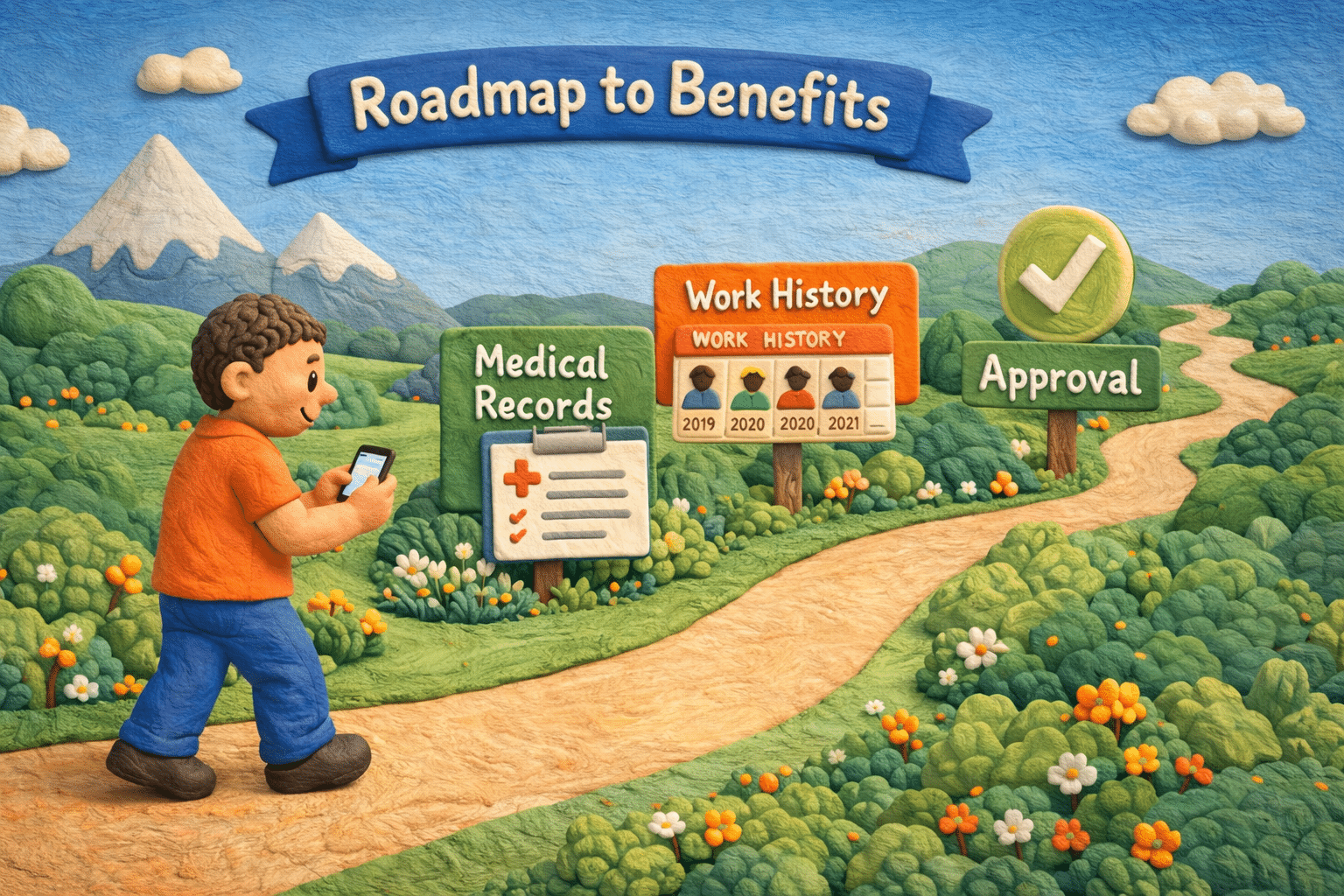
Understanding how the Social Security Administration (SSA) evaluates medical conditions is the first step toward…
The Attorney’s Master Guide to the SSD/SSI Appeals Process Vocational Expert Cross-Examination
The SSD/SSI appeals process vocational expert (VE) testimony is frequently the most technical, dense, and critical phase of a Social Security Disability (SSD) hearing. While the medical evidence forms the foundation of your claim, the vocational testimony is the “final gatekeeper.” You may have spent years documenting your physical or mental impairments, only to find yourself in a room where a professional—the Vocational Expert—claims there are thousands of jobs you can still perform. In Virginia and the surrounding mid-Atlantic region, the difference between a successful award of benefits and a devastating denial often rests on the ability of your legal counsel to dismantle the VE’s testimony through rigorous cross-examination.
Understanding the role of the vocational expert (VE) in the SSD/SSI appeals process requires in-depth knowledge of the Dictionary of Occupational Titles, Selected Characteristics of Occupations, and the HALLEX manual. At Harbison & Kavanagh, we advise clients against navigating this stage alone, as VEs, while trained and impartial, often rely on outdated data that can misrepresent your work capability. This guide addresses VE errors, the use of hypothetical questions, and strategies to effectively demonstrate the absence of suitable jobs.
Table of Contents
- The Legal Framework: Understanding the Vocational Expert’s Function
- The Chess Match: Hypothetical Questions and RFC Limitations
- Strategic Objections: Challenging Qualifications and Methodology
- The DOT Conflict: Exposing Outdated Occupational Data
- Transferability of Skills: The Silent Claim Killer
- Getting to “No Jobs”: Advanced Cross-Examination Tactics
- HALLEX and Administrative Procedures for Evidence Admission
- Watch and Listen: Expand Your Understanding
- Related Insights for Your SSD Journey
- Frequently Asked Questions
The Legal Framework: Understanding the Vocational Expert’s Function
In the SSD/SSI appeals process vocational expert serves as an expert witness who provides testimony at Step 4 and Step 5 of the Sequential Evaluation Process. At Step 4, the Administrative Law Judge (ALJ) asks the VE whether you can perform your Past Relevant Work (PRW). If the answer is no, the process moves to Step 5, where the burden of proof shifts to the SSA to show that other work exists in significant numbers in the national economy that you can perform, considering your age, education, work experience, and Residual Functional Capacity (RFC).
The VE must follow Social Security Ruling (SSR) 00-4p, which mandates that their testimony be consistent with the Dictionary of Occupational Titles. If a conflict exists, the VE must provide a reasonable explanation for the discrepancy. However, many VEs rely on their “professional experience” to fill in gaps that the DOT doesn’t cover—such as the ability to work while needing a sit/stand option or limitations on fine fingering and manipulation. Without a sharp attorney to point out these “extra-DOT” assumptions, the judge may accept the VE’s testimony as gospel, leading to an unfavorable decision.
To better understand the internal rules that these experts must follow, you can review the official SSA Vocational Expert General Guidelines, which outline how the ALJ is expected to interact with these professionals. This manual ensures that the SSD/SSI appeals process vocational expert is utilized within the strict boundaries of administrative law.

The Chess Match: Hypothetical Questions and RFC Limitations
The heart of the SSD/SSI appeals process vocational expert interaction is the hypothetical question. The ALJ will pose a scenario: “Assume a person of the claimant’s age, education, and work experience, who is limited to light work but cannot reach overhead and requires a low-stress environment. Are there jobs?” This question is the legal vessel that carries your medical limitations into the vocational realm.
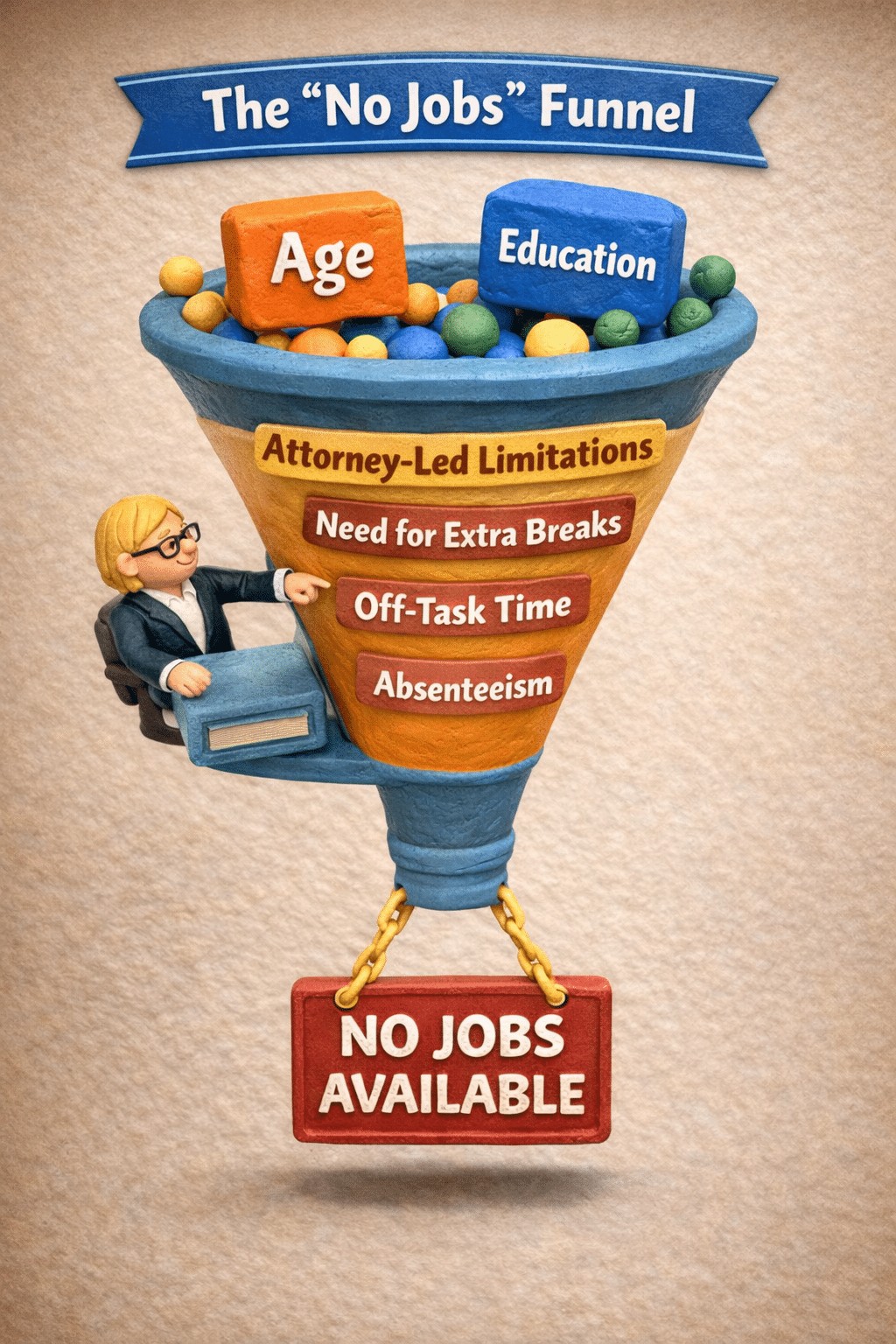
The danger lies in what the judge leaves out. A judge might omit your need to lie down for an hour a day or your inability to maintain concentration for two-hour increments. A skilled disability lawyer knows that the SSD/SSI appeals process vocational expert testimony can be flipped by adding these “missing links” during cross-examination. By asking the VE, “If this same individual would be off-task 15% of the day due to pain, would those jobs still be available?” the attorney forces the VE to admit the reality: No employer will tolerate that level of unproductivity.
Strategic Objections: Challenging Qualifications and Methodology
You have the right to challenge the VE’s expertise. In the SSD/SSI appeals process vocational expert must be qualified and provide testimony based on reliable methodology. Many attorneys fail to ask the VE about their sources. Do they use the Occupational Employment Statistics (OES)? Do they use software like Job Browser Pro? Often, VEs “cluster” jobs together, providing inflated numbers for positions that don’t actually match your limitations.
Objections should be raised on the record to preserve them for the Appeals Council. Common objections include:
- Foundation: The VE hasn’t explained how they arrived at the job numbers.
- Reliability: The data source used by the VE is not recognized as a reliable vocational authority under the Code of Federal Regulations.
- Consistency: The testimony conflicts with the SCO regarding reaching or handling requirements.
These technical maneuvers are why having a specialized Virginia SSDI lawyer is non-negotiable.
The DOT Conflict: Exposing Outdated Occupational Data
The Dictionary of Occupational Titles was last updated in full in 1977, with a minor supplement in 1991. It contains jobs that barely exist today, like “Telegraph Messenger,” while failing to account for the technological demands of the modern workplace. In the SSD/SSI appeals process vocational expert will often cite a DOT code that describes a job as it existed 40 years ago.
For example, a VE might suggest a “Document Preparer” job for someone who cannot use their hands effectively. However, the DOT description for that job might not capture the repetitive keyboarding now required in 2025. By cross-examining the VE on the functional realities of the jobs they cite, we can prove that the DOT’s descriptions are obsolete, thereby neutralizing the VE’s testimony and moving the needle closer to a “disabled” finding.
Transferability of Skills: The Silent Claim Killer
If you are over the age of 50, the SSD/SSI appeals process vocational expert will look closely at whether you have transferable skills from your past work. This is a high-stakes area. If you are 55 years old and limited to sedentary work, you win your case under the Medical-Vocational Guidelines (the Grids) unless you have skills that transfer to other sedentary jobs with very little vocational adjustment.
The VE might argue that your experience as a “Retail Manager” gives you transferable skills to a “Customer Service Clerk” position. Our job is to argue that the tools, work processes, and settings are so different that no “meaningful” transfer occurs. We dig into the POMS (Program Operations Manual System) to find the specific definitions of “skills” versus “aptitudes” to block the VE from using your hard-earned work history against you.
Getting to “No Jobs”: Advanced Cross-Examination Tactics
The ultimate victory in the SSD/SSI appeals process vocational expert portion of the hearing is the “No Jobs” statement. To achieve this, we use a “step-down” approach. We start with the judge’s most functional hypothetical and slowly add eroding factors:
- Productivity: Most VEs admit that being off-task more than 10-15% of the workday is work-preclusive.
- Attendance: Missing more than one day of work per month on a consistent basis usually results in “no jobs.”
- Interaction: For those with mental health impairments, the inability to interact with supervisors or the public can eliminate 90% of the occupational base.
- Postural Constraints: Needing to shift positions at will or needing an assistive device like a cane for balance.
When these factors are introduced correctly, the VE is backed into a corner where they must testify that no employer in the national economy would hire such an individual. This is how we win cases in Richmond, Norfolk, Roanoke, and across Virginia.

HALLEX and Administrative Procedures for Evidence Admission
The Hearings, Appeals, and Litigation Law Manual (HALLEX) contains the procedural instructions for Administrative Law Judges. Under HALLEX I-2-5-48, the judge must ensure the VE is impartial and that the claimant has a fair opportunity to cross-examine. Furthermore, if you provide new medical evidence after the hearing that contradicts the VE’s testimony, HALLEX provides the mechanism to request a supplemental hearing.
In the SSD/SSI appeals process vocational expert testimony is not the end of the road. If the VE’s testimony was flawed or the ALJ didn’t allow proper questioning, we cite HALLEX violations as a primary reason for the Appeals Council to vacate the decision and send it back for a new hearing. Procedures matter as much as the medical records themselves.
Watch and Listen: Expand Your Understanding
We know that navigating the SSD/SSI appeals process vocational expert testimony can feel like learning a foreign language. To help you feel more confident, we have created a dedicated podcast series where our attorneys simulate real cross-examinations. This audio format allows you to hear the rhythm of a hearing, the tone of the objections, and the specific way we push back against “expert” opinions. Whether you are driving to a doctor’s appointment or resting at home, listening to these expert insights is a convenient way to prepare for your day in court. Listen now to demystify the vocational portion of your claim.
Essential Preparation for Your Disability Hearing
Before you get to the stage of cross-examining a Vocational Expert, you must first survive your own testimony. The way you describe your daily activities and limitations directly impacts the hypothetical questions the judge will ask the VE. If you overstate your abilities, you give the VE a “green light” to find jobs you can do. To avoid this common mistake, read our guide on the most frequent questions asked by ALJs.
Learn more here: Top Questions Asked During SSD Hearings and How to Answer Them
Frequently Asked Questions
What exactly is a Vocational Expert (VE)?
In the SSD/SSI appeals process vocational expert is a professional hired by the Social Security Administration to provide expertise on job requirements and labor market statistics. They are intended to be impartial witnesses who help the judge determine if a person with your specific medical limitations can still find work.
Can I win my case if the VE says there are jobs available?
Yes, but it requires a successful cross-examination. Your attorney must be able to add additional limitations (like the need for extra breaks or frequent absences) that “eliminate” those jobs. If the VE’s testimony remains unchallenged, the judge will likely use those job titles as a reason to deny your claim.
Why does the VE use the Dictionary of Occupational Titles if it’s so old?
The SSA is legally required to use the DOT as its primary source of occupational information. While they are transitioning to a newer system (the Occupational Requirements Survey), the DOT remains the current legal standard. This “gap” between old descriptions and modern work is exactly what a skilled lawyer exploits during the SSD/SSI appeals process vocational expert phase.
How many jobs are considered a “significant number”?
There is no fixed number in the law, but federal courts have generally suggested that a few thousand jobs across the entire national economy can be considered significant. This is why it is vital to strike as many job titles as possible during the hearing.
What if the Vocational Expert is wrong about my past work?
This is a common error. VEs often misclassify past work as being more skilled or less physically demanding than it actually was. Your attorney must catch this immediately and correct the record, as an incorrect classification at Step 4 can lead to an “automatic” denial of benefits.
At Harbison & Kavanagh, we are dedicated to helping you navigate the SSDI application and appeals process. If you believe you qualify for SSDI and have questions, call us today at (804) 888-8000, or visit our contact page to schedule a free consultation. Our experienced lawyers are here to provide the support and guidance you need.
Related Posts