Understanding how the Social Security Administration (SSA) evaluates medical conditions is the first step toward…
SSD Application Process Checklist: Is This the Best Way to Win Benefits in 2026?
Key Takeaways: Your 2026 SSD Application Quick-Start Guide
- High Denial Risk: Approximately 65% of initial applications are denied due to avoidable technical or medical errors.
- Structured Success: Using a step-by-step checklist significantly improves your odds of an initial approval.
- Mobile-Friendly Filing: Harbison & Kavanagh offers a unique digital approach allowing you to complete your application via phone, tablet, or laptop.
- Expert Oversight: Professional guidance from start to finish ensures your medical evidence meets SSA’s strict 2026 criteria.
Quick Navigation Guide
What Is the Core Issue Facing First-Time Applicants?
The primary challenge for anyone entering the SSD application process checklist journey is the sheer complexity of the federal system. For many in Virginia and surrounding states, the Social Security Administration (SSA) feels like a “black box” where paperwork goes in and denials come out. Current data shows that roughly 65% of initial applications are rejected—a staggering figure that often discourages those who need help the most.
The core issue isn’t usually a lack of genuine disability; it is a lack of legal documentation. Most applicants approach the process from a medical perspective (“I am in pain and cannot work”), while the SSA reviews it from a technical and vocational perspective. You must bridge the gap between “feeling unable to work” and “proving legal disability” according to the strict criteria found in the SSA’s “Blue Book.” Without a structured approach, even the most severe conditions can be overlooked in the 2026 disability landscape.
Inside the “Black Box”: The Role of DDS
In Virginia, your application is eventually sent to the Disability Determination Services (DDS). This is a state-level agency that works with the SSA to make the actual medical decision. Many applicants are surprised to learn that the person deciding their fate isn’t a judge or even necessarily a doctor who has met them—it is often a claims examiner reviewing a mountain of paperwork. If your medical records are disorganized or missing key functional assessments, the examiner at DDS has no choice but to issue a technical denial.
The “Symptom vs. Evidence” Trap: A Case Study
To understand why a SSD application process checklist is vital, consider a hypothetical applicant, “John,” a 55-year-old former construction worker with severe degenerative disc disease. John’s records are full of notes saying he is in “extreme pain” and “has trouble walking.” To John, this is proof enough. However, the SSA examiner sees those as subjective symptoms.
Because John didn’t have a functional capacity evaluation or specific imaging (like an MRI or EMG) tied to his work limitations, his claim was denied. The SSA didn’t doubt John was in pain; they simply didn’t have the legal evidence to prove he couldn’t perform a sedentary (desk) job. At Harbison & Kavanagh, we help you avoid John’s fate by ensuring your doctors document objective findings that translate directly to the SSA’s vocational rules.
We also recognize that the 2026 digital divide is real. That is why we have developed a proprietary mobile-friendly method that allows our clients to manage their application from a smartphone or tablet, removing the stress of traditional desktop-only filing and ensuring no piece of evidence is left behind.
Who Qualifies for SSDI and When Should You Apply?
To qualify for Social Security Disability Insurance (SSDI), you must meet two distinct types of requirements: work credits and medical severity.
First, you must have worked in jobs covered by Social Security and have enough credits based on your age. Generally, you need 40 credits, 20 of which were earned in the last 10 years ending with the year you become disabled. Second, your medical condition must be expected to last at least 12 months or result in death. It must prevent you from performing “Substantial Gainful Activity” (SGA).
You should apply as soon as you become disabled. Waiting too long can result in a loss of back pay or, in worse cases, the expiration of your “Date Last Insured.” If you are in Virginia, Maryland, or North Carolina, navigating these dates is the first item on your SSD application process checklist.
How Does the SSD Application Process Work Step-by-Step?
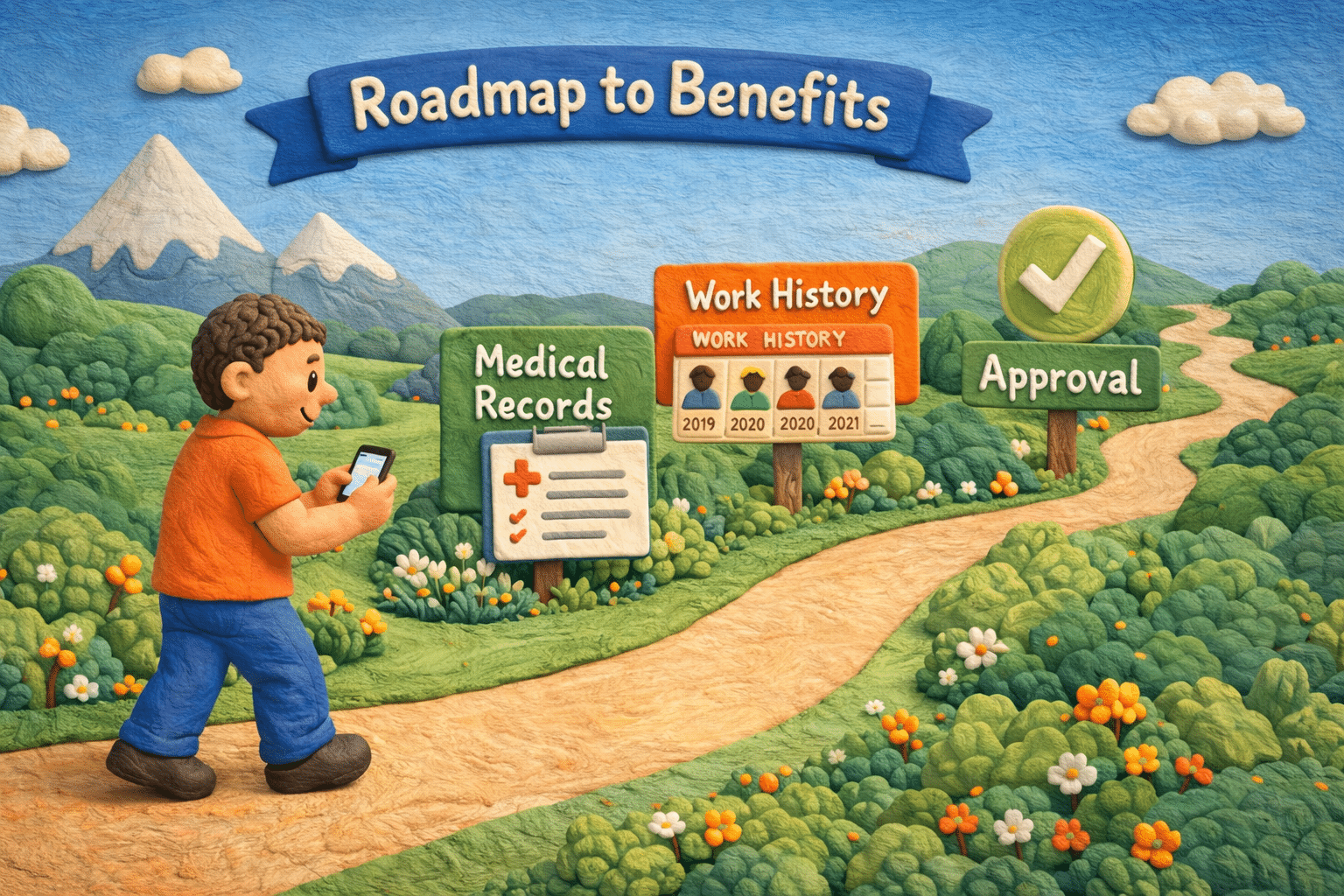
Navigating the application requires a surgical level of detail. Follow this checklist to ensure nothing is missed:
1. Gather Identification: You need your Social Security card, birth certificate, and proof of citizenship.
2. Medical Record Consolidation: Compile a list of all doctors, hospitals, and clinics you have visited. Include names, addresses, phone numbers, and dates of service.
3. Work History Log: The SSA requires a detailed summary of where you worked and the type of work you did for the last 5 years.
4. The “Unique Approach” Filing: Whether you choose to file via the official SSA portal or use our mobile-optimized system at Harbison & Kavanagh, ensure every box is filled accurately.
5. Third-Party Reports: Collect statements from former employers or caregivers who can attest to your daily limitations.
Navigating the application requires a surgical level of detail. While this checklist covers your immediate needs, you can view our comprehensive guide on the full SSD application process to see how these steps fit into the SSA’s larger timeline.”
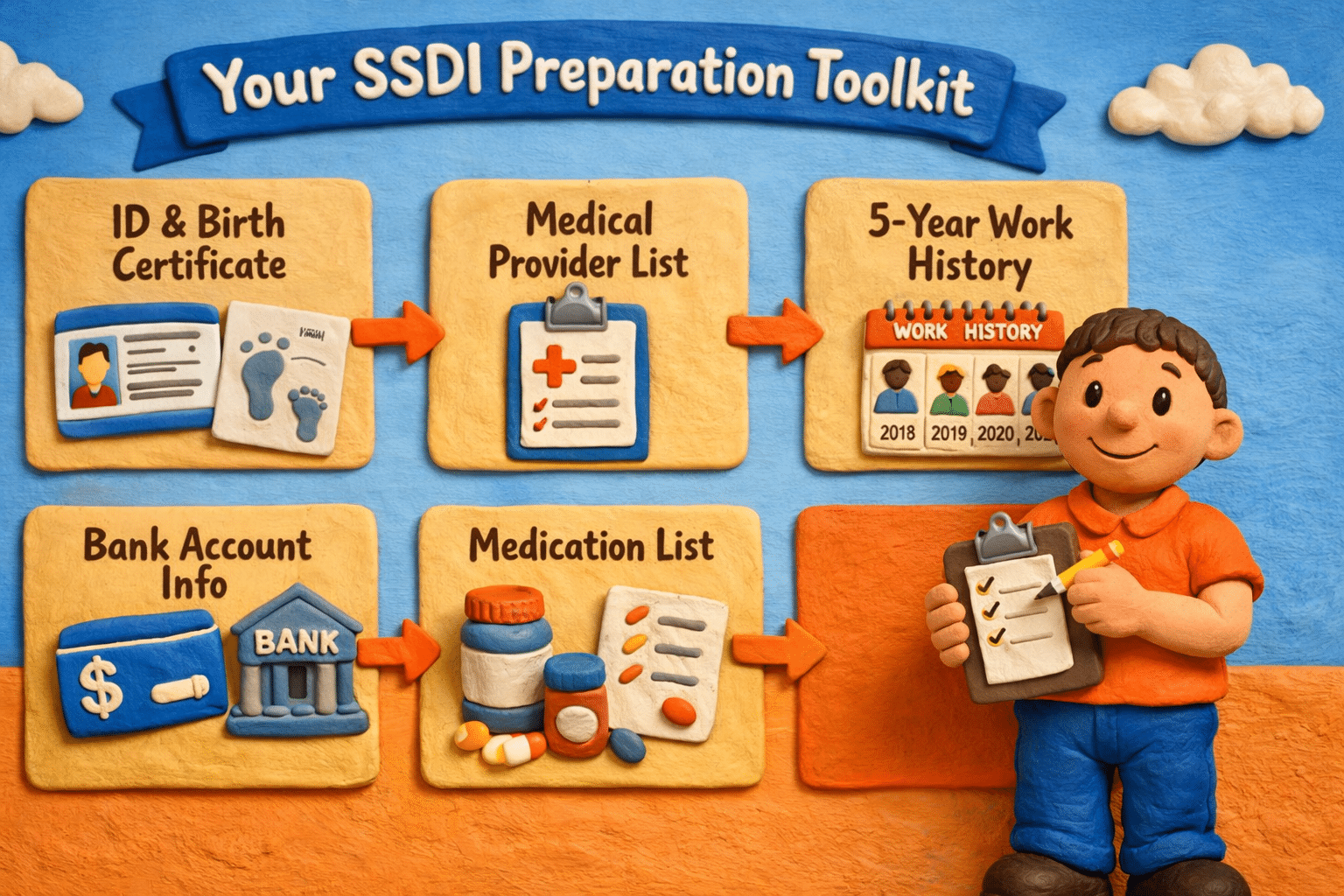
Summary: This visual provides a clear, 5-point checklist of the physical documents needed to start an application, helping users organize their files before beginning.
How Long Does the Process Take and Why the Wait?
In 2026, the average processing time for an initial disability decision ranges from 6 to 9 months. This delay is primarily due to the heavy backlog at Disability Determination Services (DDS).
Once you submit your application, a claims examiner is assigned to your file. They must request medical records from every provider you listed. If a doctor is slow to respond, your claim sits in limbo. This is where Harbison & Kavanagh adds immense value; our team actively tracks your medical requests to ensure the SSA has what they need to make a timely decision.
Why Are So Many Initial SSD Applications Denied?
The 65% denial rate is a sobering reality for first-time filers. The reasons are often procedural rather than medical:
* Failure to Follow Treatment: If you aren’t seeing a doctor regularly, the SSA assumes your condition isn’t severe.
* Technical Errors: Simple mistakes, like missing a signature or providing an incorrect work date, can trigger an automatic denial.
* Income Above SGA: If you are still earning more than the monthly limit, you are technically not “disabled” in the eyes of the law.
* Vague Medical Evidence: Records that say “patient is doing better” without quantifying limitations can sink a claim.
How Can You Improve Your Approval Odds Today?
The single most effective way to improve your odds is to front-load your evidence. Do not wait for the SSA to find your records; provide them at the start.
Ensure your doctors are documenting your functional limitations. For example, instead of a record saying “patient has back pain,” it should say “patient cannot stand for more than 15 minutes or lift more than 5 pounds.” At Harbison & Kavanagh, we walk you through this step-by-step to ensure your “medical story” is told correctly from day one.
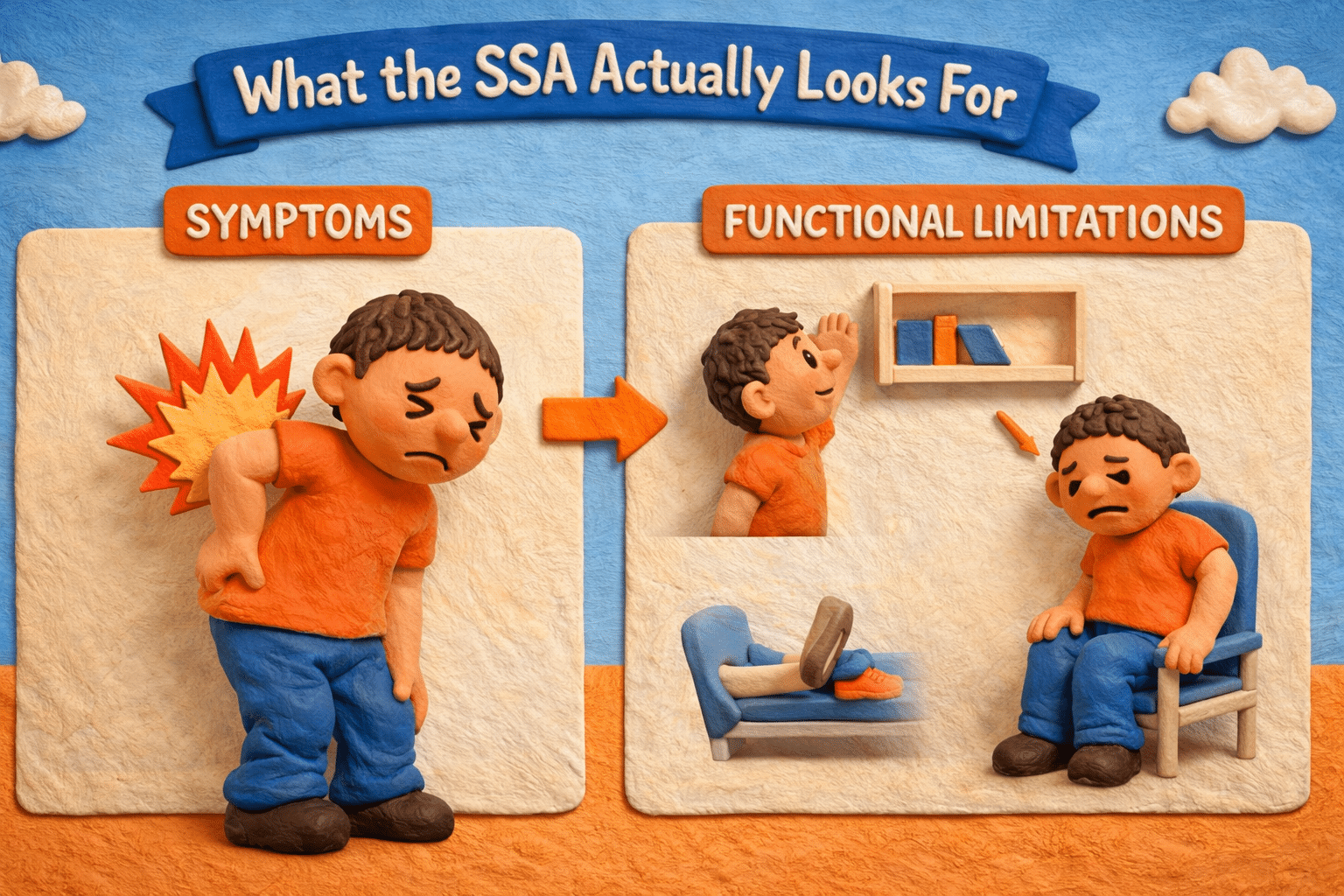
Summary: This graphic explains the crucial difference between telling the SSA you have pain (a symptom) and proving what you can no longer do (a limitation).
What Happens if Your Initial Application Is Denied?
If you receive a denial letter, do not give up. This is merely the end of phase one. You have 60 days to file a Request for Reconsideration.
Many people make the mistake of filing a brand-new application. Do not do this. Filing a new application instead of appealing causes you to lose your original filing date and potential back pay. An appeal keeps your claim alive and moves it closer to a hearing with an Administrative Law Judge (ALJ), where approval rates are historically higher.
Understanding the Impact of Medical Experts
Success in the SSDI world often depends on how well you handle the medical review phase. If you want to dive deeper into how the SSA evaluates your health, we recommend our guide on medical experts. Understanding this role can help you prepare for the questions you might face during your review.
The Role of Medical Experts in Your Disability Claim
Watch and Listen: Expand Your Understanding
We understand that reviewing a 2,500-word guide can be overwhelming when you are dealing with a chronic illness. To make this information more accessible, we have produced a dedicated audio episode covering the SSD application process checklist. This podcast is perfect for listening while you are resting or traveling to a doctor’s appointment. Our legal experts break down the 2026 updates in an easy-to-digest format, providing insider tips that aren’t found in the standard manuals. Hit play below to gain a competitive edge on your application today.
—
Frequently Asked Questions
Can I apply for SSDI if I am still working?
Yes, but your earnings must be below the Substantial Gainful Activity (SGA) limit. In 2026, if you earn more than the federally mandated limit, your application will likely be denied regardless of your medical condition.
Do I need a lawyer to file an initial application?
While not required, having a lawyer helps you avoid the common mistakes that lead to the 65% denial rate. Our team at Harbison & Kavanagh guides you from start to finish.
What is the difference between SSDI and SSI?
SSDI is based on your work history and Social Security taxes paid. SSI (Supplemental Security Income) is a needs-based program for those with limited income and assets, regardless of work history.
Can I fill out the application on my phone?
Yes. Our unique digital approach allows clients to complete the necessary documentation on a phone, tablet, or laptop for maximum convenience.
How much does it cost to hire Harbison & Kavanagh?
We work on a contingency fee basis. This means we only get paid if we win your case. Our fees are typically paid out of the back pay awarded to you by the SSA.
How far back will the SSA pay me?
Back pay is generally calculated from your “onset date” minus a five-month waiting period, up to 12 months prior to the date you filed your application.
What states do you serve?
We primarily serve Virginia but are expanding our support to surrounding states to help more individuals navigate the disability system.
—
At Harbison & Kavanagh, we are dedicated to helping you navigate the SSDI application and appeals process. If you believe you qualify for SSDI and have questions, call us today at (804) 888-8000, or visit our contact page to schedule a free consultation. Our experienced lawyers are here to provide the support and guidance you need.
Related Posts