
Understanding how the Social Security Administration (SSA) evaluates medical conditions is the first step toward…

How to Prepare for Your SSD Hearing Without a Lawyer: 7 Essential Steps for Success
When facing a Social Security Disability (SSD) hearing, many Virginia residents wonder how to prepare for your SSD hearing without a lawyer. While legal representation can be valuable, understanding the preparation process empowers you to present your case effectively, regardless of whether you choose to proceed with or without an attorney.
Table of Contents
- Understanding the SSD Hearing Process
- Gathering Essential Documentation for Your Hearing
- Preparing Your Personal Testimony
- Understanding Medical Evidence Requirements
- Preparing for Vocational Expert Testimony
- Hearing Day Preparation and Logistics
- Common Mistakes to Avoid During Your Hearing
- Watch and Listen: Expand Your Understanding
- Strengthen Your Case with Additional Resources
- Frequently Asked Questions
Understanding the SSD Hearing Process
Learning how to prepare for your SSD hearing without a lawyer begins with understanding what happens during the hearing itself. The Administrative Law Judge (ALJ) will review your case, examine evidence, and make a determination about your disability claim. This process typically lasts 30-60 minutes and follows a structured format.
The hearing represents your opportunity to present your case directly to the decision-maker. Unlike the initial application and reconsideration phases, which rely primarily on written documentation, the hearing allows for real-time interaction. The ALJ will ask questions about your medical conditions, work history, and daily limitations.
During the hearing, you’ll have the chance to explain how your disability affects your ability to work. The judge may also call upon medical experts or vocational experts to provide testimony relevant to your case. Understanding this process helps you prepare more effectively and reduces anxiety about the unknown.
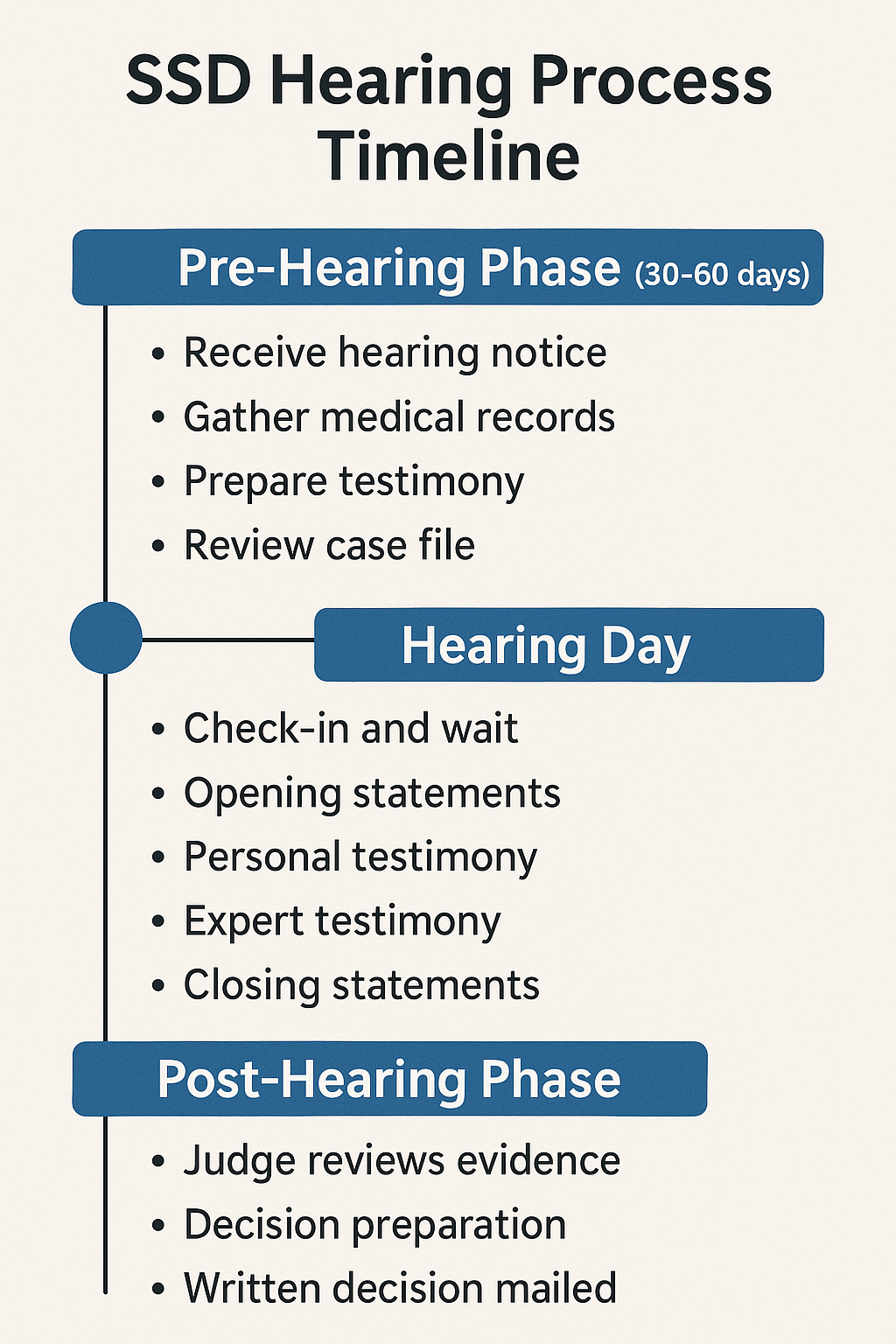
This timeline illustrates the three main phases of the SSD hearing process, showing key activities and milestones from preparation through final decision.
Gathering Essential Documentation for Your Hearing
Proper documentation forms the foundation of learning how to prepare for your SSD hearing without a lawyer. Your medical records serve as the primary evidence supporting your disability claim. Begin collecting these documents at least 60 days before your hearing date.
Start with your primary care physician’s records, then expand to include all specialists who have treated your condition. Hospital records, emergency room visits, and diagnostic test results provide crucial supporting evidence. Don’t overlook mental health records if applicable, as these can be equally important in demonstrating your disability.
Work history documentation proves essential for establishing your past relevant work and demonstrating how your disability prevents you from returning to previous employment. Gather pay stubs, tax returns, and employment records spanning the past 15 years. This information helps the vocational expert understand your work background and transferable skills.
Third-party statements from family members, friends, or former colleagues can provide valuable perspective on how your disability affects your daily life. These statements should focus on specific examples of limitations and changes in your abilities since your disability onset.
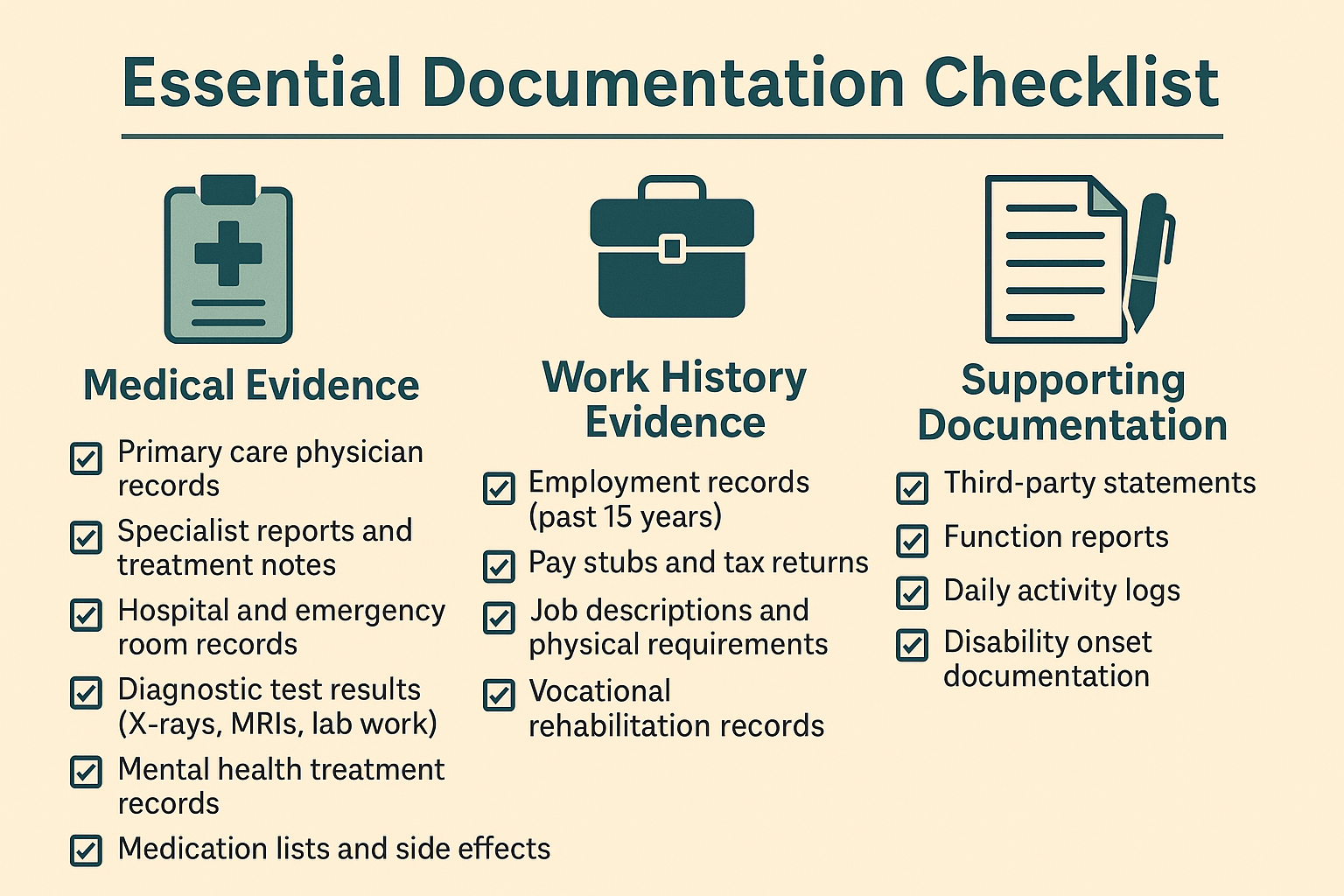
This comprehensive checklist ensures you gather all necessary documentation to support your SSD hearing preparation.
Preparing Your Personal Testimony
Your personal testimony represents a critical component when learning how to prepare for your SSD hearing without a lawyer. The ALJ wants to understand how your disability affects your ability to work and perform daily activities. Practice explaining your conditions in clear, specific terms without using excessive medical jargon.
Focus on functional limitations rather than just medical diagnoses. Describe how your condition prevents you from sitting, standing, walking, lifting, or concentrating for extended periods. Provide specific examples of how these limitations affect your daily life and work capacity.
Prepare to discuss your work history honestly and thoroughly. The judge will want to understand what you did in previous jobs and why you can no longer perform those duties. Be ready to explain any gaps in employment and how your condition has worsened over time.
Practice answering common questions about your daily activities, pain levels, and treatment compliance. The judge may ask about household chores, social activities, and self-care abilities. Your answers should be honest and consistent with your medical records and written statements.
Consider the emotional aspects of testifying about your disability. Many people find it difficult to discuss their limitations and may feel embarrassed or defensive. Remember that the purpose is to provide accurate information to help the judge make an informed decision.
Understanding Medical Evidence Requirements
Medical evidence forms the cornerstone of any successful SSD claim, making it essential to understand these requirements when learning how to prepare for your SSD hearing without a lawyer. The Social Security Administration’s Blue Book lists specific criteria for various medical conditions.
Your medical records must demonstrate the severity and duration of your condition. The evidence should show that your disability has lasted or is expected to last at least 12 months. Consistent treatment records strengthen your case and demonstrate that you’re following prescribed medical advice.
Objective medical evidence carries more weight than subjective complaints. Laboratory results, imaging studies, and clinical findings provide concrete support for your disability claim. However, don’t dismiss the importance of documenting symptoms like pain, fatigue, or cognitive difficulties through detailed medical notes.
Treatment compliance plays a crucial role in your case evaluation. The judge will examine whether you’ve followed prescribed treatments and medications. If you’ve been unable to afford treatment or have experienced side effects, ensure these circumstances are documented in your medical records.
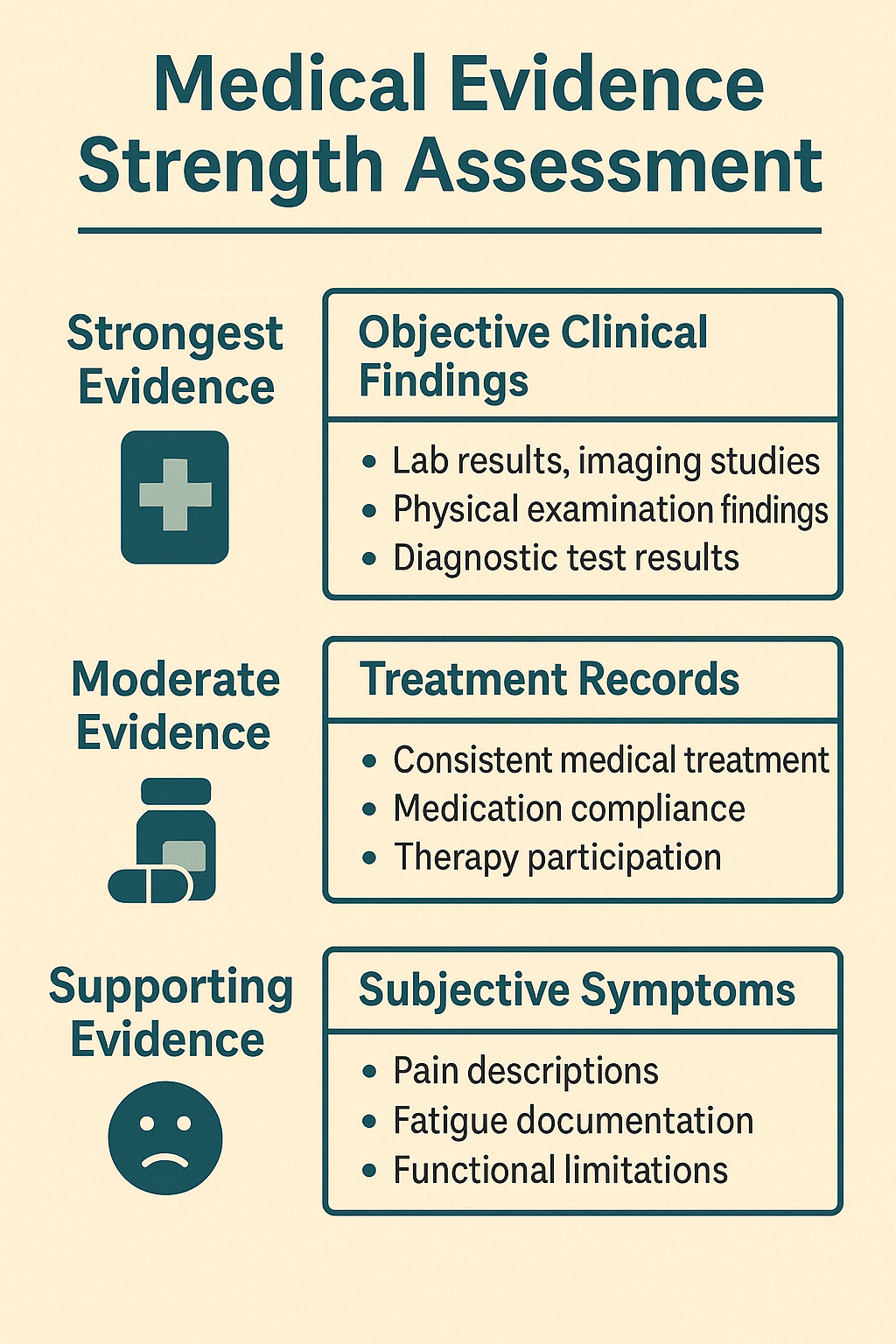
This assessment tool helps evaluate the strength of different types of medical evidence in your SSD hearing preparation.
Preparing for Vocational Expert Testimony
Understanding vocational expert testimony is crucial when learning how to prepare for your SSD hearing without a lawyer. The vocational expert (VE) provides testimony about job availability and your ability to perform work based on your age, education, work experience, and physical or mental limitations.
The VE will classify your past work according to skill level, physical demands, and specific vocational preparation required. They’ll also consider whether you can return to any of your previous jobs given your current limitations. If you cannot return to past work, the VE will determine if other jobs exist that you could perform.
Prepare to provide accurate information about your work history, including job titles, duties, physical requirements, and duration of employment. The VE’s testimony depends heavily on this information, so accuracy is essential. Consider how your disability affects your ability to perform the physical and mental demands of your previous work.
Be ready to listen carefully to hypothetical questions the judge poses to the VE. These questions typically describe someone with your age, education, work experience, and limitations. The VE’s answers to these hypotheticals often determine the outcome of your case.
If you disagree with the VE’s characterization of your past work or their assessment of available jobs, you may have the opportunity to question their testimony. Prepare thoughtful questions that highlight inconsistencies or challenge assumptions about your capabilities.
Hearing Day Preparation and Logistics
Proper preparation for hearing day logistics is essential when learning how to prepare for your SSD hearing without a lawyer. Plan to arrive at the hearing location at least 30 minutes early to allow time for parking, security procedures, and check-in processes.
Dress professionally and conservatively for your hearing. Your appearance should convey respect for the process while accurately representing your physical condition. Avoid clothing that might contradict your claimed limitations, but don’t exaggerate your condition either.
Bring all requested documents in an organized manner. Create a folder system that allows you to quickly locate specific records if the judge requests them during the hearing. Include copies of everything, as originals may be retained by the hearing office.
Consider your physical comfort during the hearing. If you have difficulty sitting for extended periods, inform the hearing office in advance. Most ALJs will accommodate reasonable requests for breaks or alternative seating arrangements.
Prepare for potential delays or rescheduling. Hearing offices sometimes experience unexpected delays, and judges may need to reschedule hearings due to emergencies. Have backup plans for transportation and work arrangements.
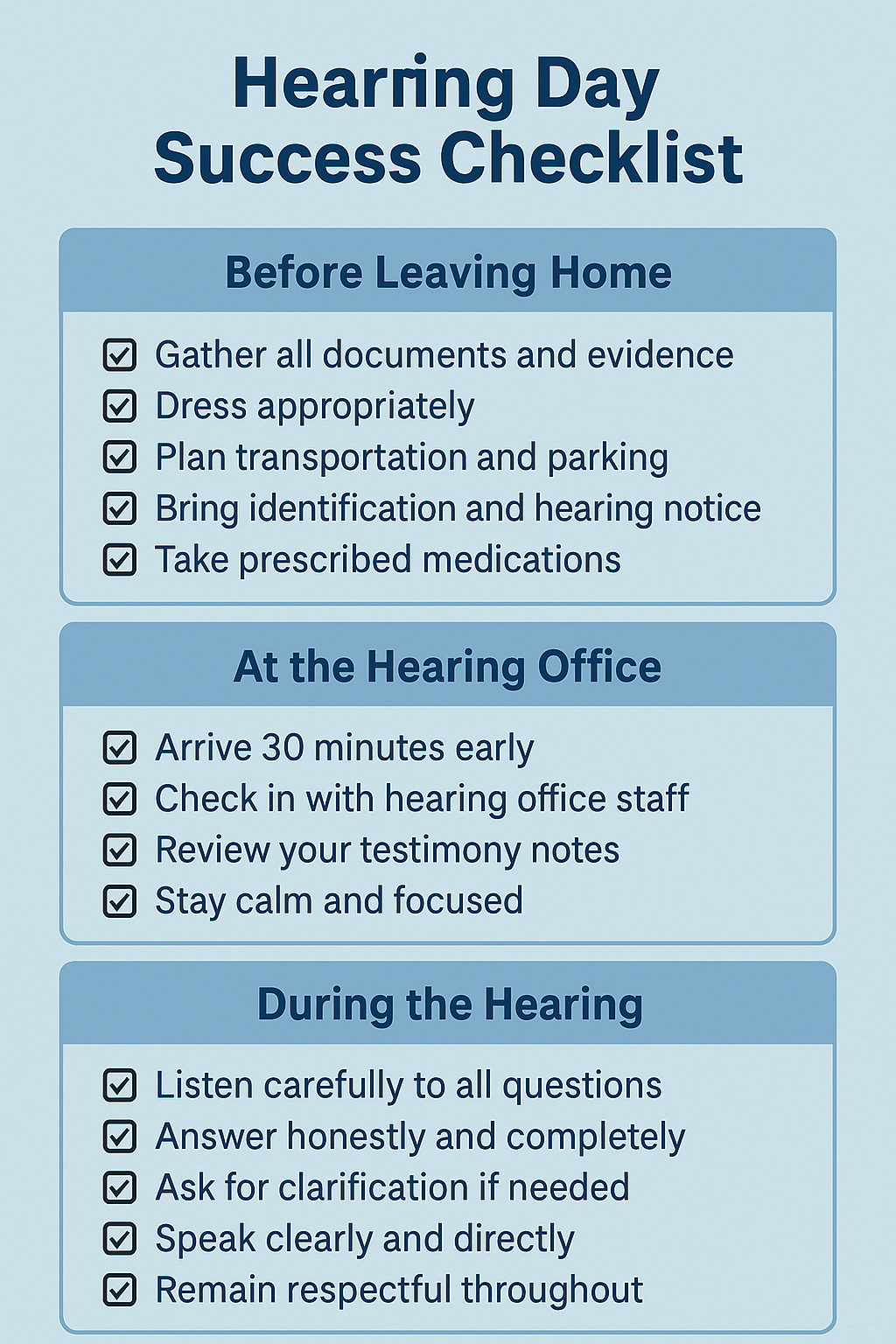
This comprehensive checklist ensures you’re fully prepared for every aspect of your hearing day experience.
Common Mistakes to Avoid During Your Hearing
Avoiding common pitfalls is crucial when learning how to prepare for your SSD hearing without a lawyer. Many claimants inadvertently damage their cases by making preventable mistakes during the hearing process.
One frequent error involves inconsistent testimony about daily activities and limitations. Ensure your hearing testimony aligns with your written statements and medical records. Contradictions raise credibility concerns and may lead to an unfavorable decision.
Avoid minimizing your symptoms or trying to appear stronger than you are. Some claimants worry about seeming weak or dependent, but the hearing is not the time to downplay your limitations. Be honest about your worst days and how your condition affects your ability to work consistently.
Don’t argue with the judge or become defensive when questioned about your disability. The ALJ is trying to understand your situation, not attack your credibility. Maintain a respectful, cooperative attitude throughout the hearing process.
Failing to prepare for common questions represents another significant mistake. Practice explaining your condition, limitations, and daily activities before the hearing. Rambling or unclear answers can confuse the judge and weaken your case.
Avoid bringing irrelevant information or focusing on issues outside the scope of your disability claim. Stay focused on how your medical conditions prevent you from working and performing daily activities.
Watch and Listen: Expand Your Understanding
Deepen Your Knowledge with Expert Audio Content
Enhance your understanding of SSD hearing preparation through our comprehensive podcast series. These audio resources provide expert insights and real-world examples that complement your hearing preparation efforts. Listen while commuting, exercising, or during your daily routine to maximize your learning opportunities. Our experienced disability attorneys share practical tips and strategies that can make a significant difference in your case outcome. Don’t miss these valuable resources that can help you feel more confident and prepared for your upcoming hearing.
Strengthen Your Case with Additional Resources
Essential Insights for Your SSD Journey
Building a strong foundation for your SSD hearing requires understanding various aspects of the disability process. Our comprehensive guide on Questions Asked During SSD Hearings provides invaluable preparation insights that complement your hearing strategy. This resource offers detailed examples of typical questions, effective response strategies, and tips for maintaining credibility throughout your testimony. Understanding what to expect can significantly reduce anxiety and improve your performance during this crucial stage of your disability claim.
Frequently Asked Questions
Q: How long does an SSD hearing typically last?
A: Most SSD hearings last between 30-60 minutes, depending on the complexity of your case and the amount of evidence presented. The judge will take as much time as necessary to thoroughly review your situation.
Q: Can I bring family members or friends to my hearing?
A: Yes, you can bring observers to your hearing, but they typically cannot testify unless they’ve submitted written statements beforehand. Check with the hearing office about their specific policies regarding observers.
Q: What happens if I miss my scheduled hearing?
A: Missing your hearing without good cause can result in dismissal of your case. If you have a valid reason for missing the hearing, contact the hearing office immediately to request rescheduling.
Q: How soon after my hearing will I receive a decision?
A: Most hearing decisions are issued within 30-60 days after the hearing. Complex cases may take longer, but the hearing office will notify you of any delays.
Q: Can I submit additional evidence after my hearing?
A: You may be able to submit additional evidence within a limited timeframe after your hearing, but this depends on specific circumstances and the judge’s discretion. It’s best to submit all evidence before the hearing.
Q: What should I do if I disagree with the judge’s decision?
A: If you disagree with an unfavorable decision, you can appeal to the Appeals Council within 60 days of receiving the decision. The Appeals Council will review your case for errors in the hearing process.
Learning how to prepare for your SSD hearing without a lawyer requires dedication, organization, and thorough preparation. By following these seven essential steps, you’ll be better equipped to present your case effectively and increase your chances of a favorable outcome. Remember that preparation is key to success, and taking the time to understand the process will serve you well during this important stage of your disability claim.
At Harbison & Kavanagh, we are dedicated to helping you navigate the SSDI application and appeals process. If you believe you qualify for SSDI and have questions, call us today at (804) 888-8000, or visit our contact page to schedule a free consultation. Our experienced lawyers are here to provide the support and guidance you need.
Related Posts