
Understanding how the Social Security Administration (SSA) evaluates medical conditions is the first step toward…

7 Crucial Steps to Master the Social Security Disability Appeal Process: Your Virginia Guide to Success
The Social Security Disability appeal process can feel overwhelming when you’re already dealing with a disabling condition. However, understanding the systematic approach to challenging a denied claim can significantly improve your chances of obtaining the benefits you deserve. In Virginia, thousands of individuals navigate this complex system each year, and those who follow proven strategies often achieve better outcomes than those who attempt to handle appeals without proper guidance.
Table of Contents
- Understanding the Social Security Disability Appeal Process
- Step 1: Request Reconsideration Within the Deadline
- Step 2: Gather Additional Medical Evidence
- Step 3: Prepare for Your Administrative Law Judge Hearing
- Step 4: Present a Compelling Case at Your Hearing
- Step 5: Navigate the Appeals Council Review Process
- Step 6: Consider Federal Court Appeal Options
- Step 7: Maintain Comprehensive Documentation Throughout
- Common Mistakes to Avoid During the Appeal Process
- Watch and Listen: Expand Your Understanding
- Strengthen Your Appeal Strategy with Professional Guidance
- Frequently Asked Questions
Understanding the Social Security Disability Appeal Process
The Social Security Disability appeal process consists of multiple levels, each designed to provide applicants with opportunities to present their case for benefits. When the Social Security Administration (SSA) initially denies your claim, you have the right to challenge this decision through a structured appeals system. This process includes reconsideration, administrative law judge hearings, Appeals Council review, and federal court appeals.
Statistics from the Social Security Administration show that approximately 65% of initial disability claims are denied. However, many of these denials are successfully overturned during the appeals process, particularly at the administrative law judge hearing level where approval rates can exceed 60%.
The Four Levels of Appeal
The Social Security Disability appeal process follows a specific hierarchy that must be completed in order. Understanding each level helps you prepare effectively and increases your chances of success at each stage.
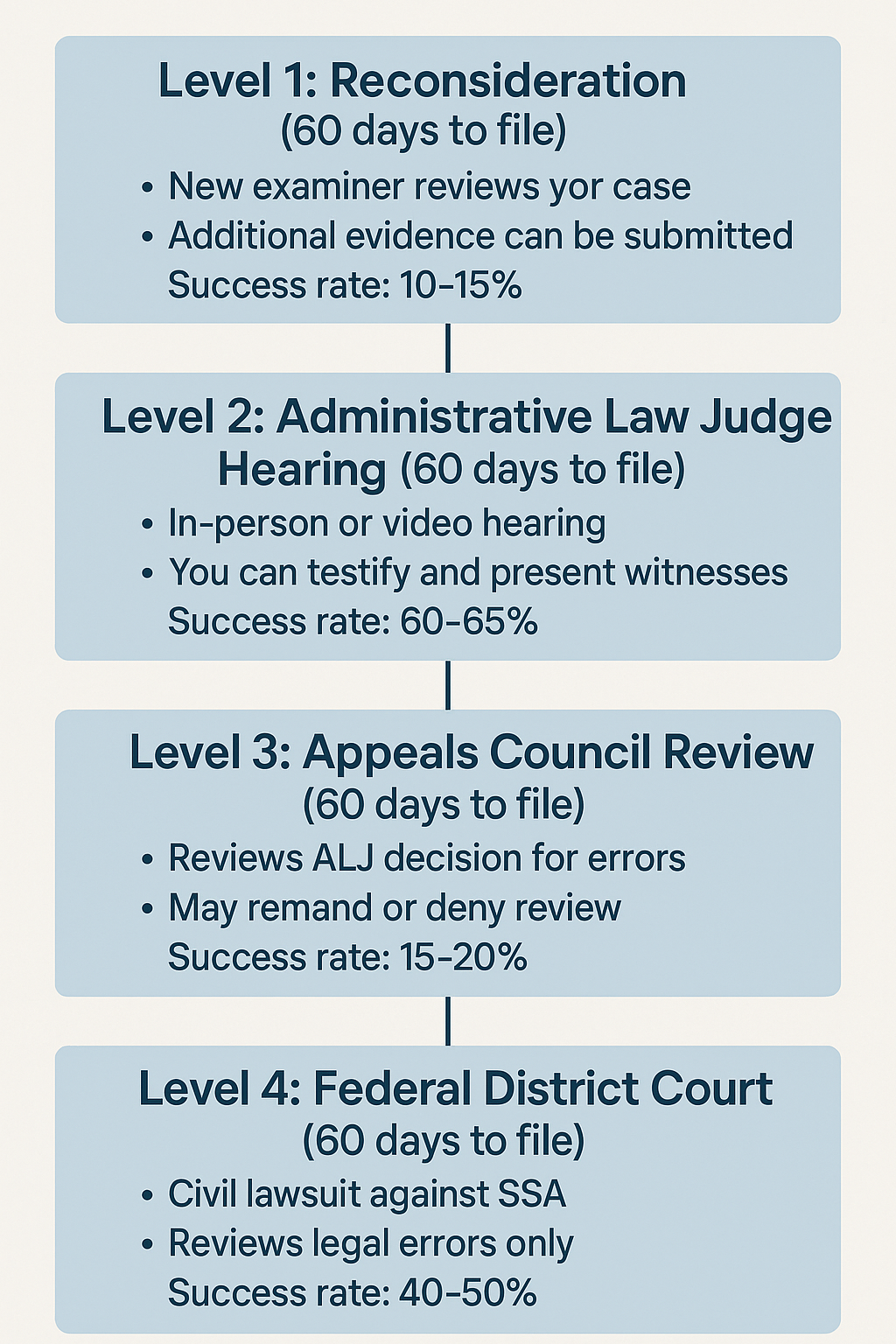
This visual representation demonstrates the progressive nature of the Social Security Disability appeal process and highlights the importance of proper preparation at each level.
Step 1: Request Reconsideration Within the Deadline
The first crucial step in the Social Security Disability appeal process is requesting reconsideration within 60 days of receiving your denial notice. This deadline is strictly enforced, and missing it can result in having to restart the entire application process from the beginning.
During reconsideration, a different examiner who was not involved in the original decision reviews your case. This examiner will consider all evidence that was in your file during the initial determination, plus any new evidence you submit. The reconsideration process typically takes 30-90 days to complete.
Key Actions for Reconsideration
When filing for reconsideration in the Social Security Disability appeal process, focus on addressing the specific reasons for your initial denial. Common reasons include insufficient medical evidence, failure to follow prescribed treatment, or the determination that your condition is not severe enough to prevent work.
Submit Form SSA-561 (Request for Reconsideration) along with any new medical evidence that supports your claim. Include detailed statements from your treating physicians that specifically address your functional limitations and how they impact your ability to work.
Step 2: Gather Additional Medical Evidence
Medical evidence forms the foundation of any successful Social Security Disability appeal process. The SSA makes decisions based on objective medical findings, treatment records, and professional opinions from qualified medical sources. Strengthening your medical evidence between appeal levels significantly improves your chances of approval.
Focus on obtaining comprehensive medical records that document the progression of your condition, your response to treatment, and any functional limitations. Request detailed reports from your treating physicians that address your specific limitations in sitting, standing, walking, lifting, and concentrating.
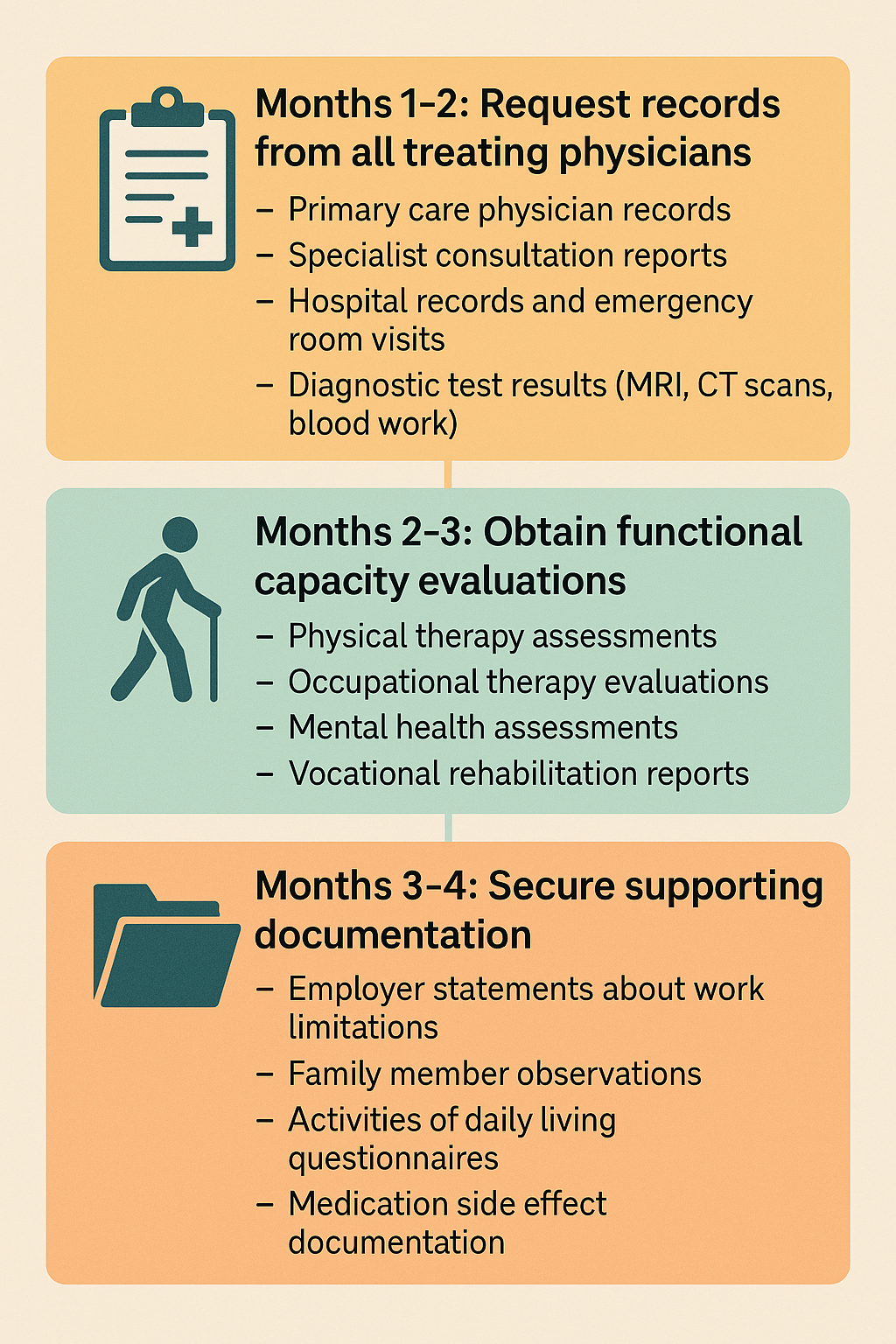
This systematic approach to evidence gathering ensures that your Social Security Disability appeal process includes all relevant medical information that supports your claim.
Step 3: Prepare for Your Administrative Law Judge Hearing
The administrative law judge (ALJ) hearing represents the most critical stage of the Social Security Disability appeal process. This is where you have the opportunity to present your case in person, testify about your limitations, and provide additional evidence to support your claim.
ALJ hearings are typically scheduled 12-18 months after your request, giving you substantial time to prepare. Use this time wisely by organizing your medical evidence, practicing your testimony, and understanding the specific requirements for your type of disability claim.
Hearing Preparation Strategies
Successful preparation for the Social Security Disability appeal process hearing involves understanding the format, anticipating questions, and organizing your evidence presentation. The ALJ will ask specific questions about your daily activities, work history, and functional limitations.
Prepare detailed examples of how your condition affects your ability to perform work-related activities. Be ready to discuss your typical day, including any accommodations you need for basic activities like bathing, dressing, cooking, and household maintenance.
Step 4: Present a Compelling Case at Your Hearing
During your ALJ hearing in the Social Security Disability appeal process, your testimony and evidence presentation can significantly impact the outcome. The ALJ will evaluate your credibility, the consistency of your statements with medical evidence, and the severity of your functional limitations.
Be honest and specific when describing your limitations. Avoid exaggerating your symptoms, but don’t minimize them either. The ALJ needs to understand exactly how your condition prevents you from maintaining substantial gainful activity.
Effective Testimony Techniques
When testifying during the Social Security Disability appeal process hearing, focus on concrete examples rather than general statements. Instead of saying “I have pain,” describe how the pain affects specific activities: “The pain in my back prevents me from sitting for more than 15 minutes at a time, and I need to lie down for at least 30 minutes every two hours.”
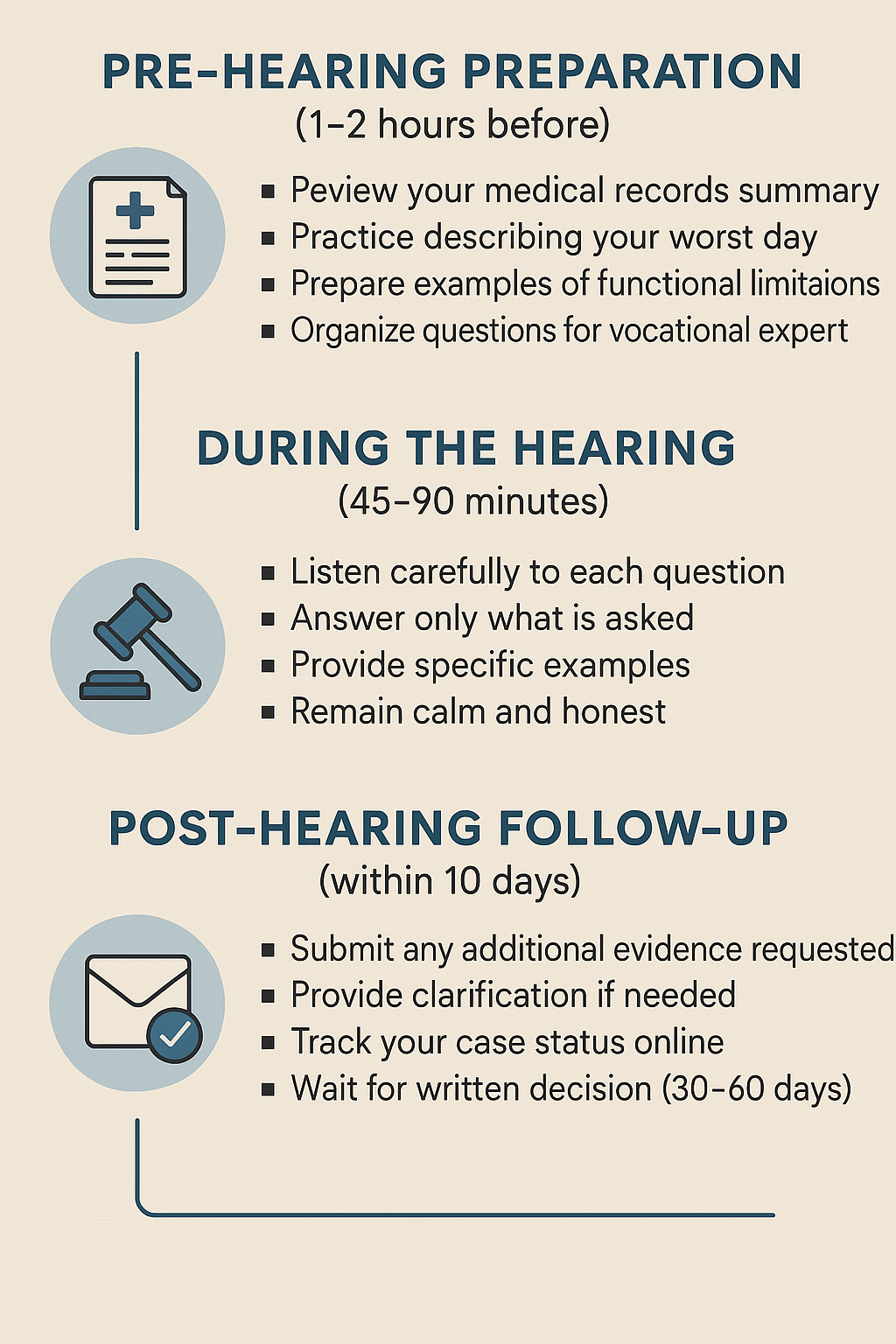
This structured approach to the hearing phase of the Social Security Disability appeal process helps ensure you present the strongest possible case to the ALJ.
Step 5: Navigate the Appeals Council Review Process
If the ALJ denies your claim, the next level of the Social Security Disability appeal process is the Appeals Council review. The Appeals Council does not conduct hearings; instead, it reviews the ALJ’s decision to determine if it was made in accordance with Social Security law and regulations.
The Appeals Council may deny your request for review, approve your claim, or remand your case back to an ALJ for further proceedings. The review process typically takes 12-18 months, making this one of the longest phases of the Social Security Disability appeal process.
Appeals Council Strategy
When requesting Appeals Council review in the Social Security Disability appeal process, focus on legal errors made by the ALJ rather than simply disagreeing with the decision. Common grounds for Appeals Council review include failure to properly evaluate medical evidence, incorrect application of Social Security regulations, or procedural errors during the hearing.
Submit a detailed brief explaining why the ALJ’s decision was legally incorrect, supported by citations to relevant Social Security regulations and case law. Include any new and material evidence that relates to the period before the ALJ’s decision.
Step 6: Consider Federal Court Appeal Options
The final level of the Social Security Disability appeal process is filing a civil lawsuit in federal district court. This step requires filing within 60 days of receiving the Appeals Council’s decision and involves challenging the SSA’s final decision on legal grounds.
Federal court appeals focus on whether the SSA’s decision was supported by substantial evidence and whether proper legal standards were applied. The court does not re-examine the medical evidence but reviews whether the administrative process followed applicable laws and regulations.
Federal Court Considerations
Before pursuing federal court review in the Social Security Disability appeal process, consider the time, expense, and complexity involved. Federal court cases typically take 12-24 months to resolve and require legal representation familiar with Social Security law and federal court procedures.
Success rates in federal court vary depending on the specific legal issues involved, but courts remand approximately 40-50% of cases back to the SSA for further proceedings when legal errors are identified.
Step 7: Maintain Comprehensive Documentation Throughout
Throughout the entire Social Security Disability appeal process, maintaining detailed documentation is crucial for success. This includes keeping copies of all correspondence with the SSA, medical records, hearing transcripts, and any other relevant documents.
Create a comprehensive file system that allows you to quickly locate specific documents during any phase of the appeals process. This organization becomes particularly important during ALJ hearings when you may need to reference specific medical records or previous statements.
Documentation Best Practices
Effective documentation during the Social Security Disability appeal process involves creating both physical and digital copies of all important documents. Maintain a timeline of your medical treatment, work history, and interactions with the SSA to ensure consistency in your statements and evidence.
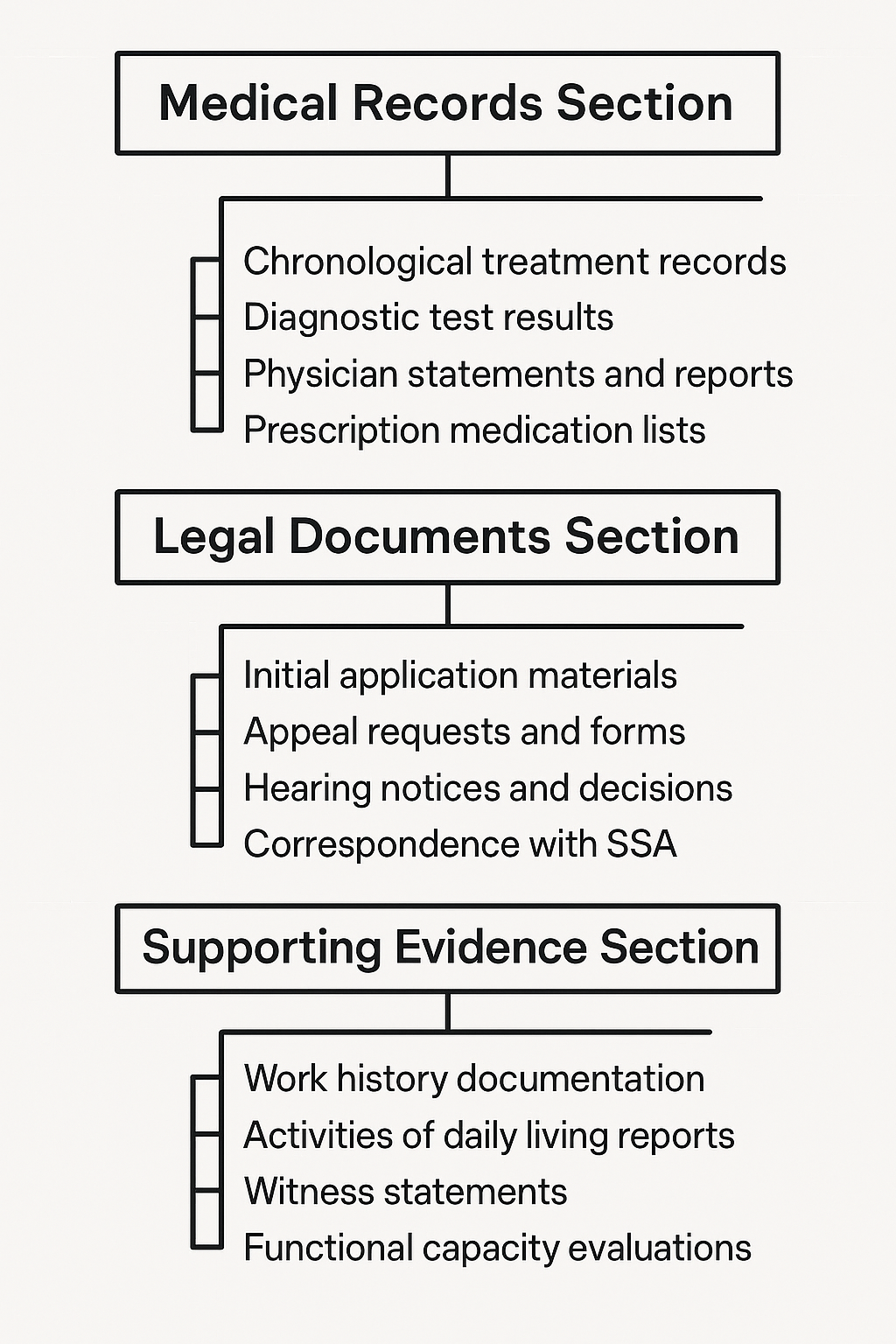
This systematic approach to documentation ensures that you have immediate access to all relevant information throughout the Social Security Disability appeal process.
Common Mistakes to Avoid During the Appeal Process
Understanding common pitfalls in the Social Security Disability appeal process can help you avoid costly errors that may jeopardize your case. Many applicants make preventable mistakes that significantly reduce their chances of success.
One of the most critical mistakes is missing deadlines. The 60-day deadline for filing appeals is strictly enforced, and late filings typically result in having to restart the entire process. Always file your appeal as soon as possible after receiving a denial notice.
Another common error involves inadequate medical evidence. Many applicants assume that their initial medical records are sufficient for the appeals process, but strengthening your medical evidence between appeal levels is often necessary for success.
Avoiding Critical Errors
The Social Security Disability appeal process requires attention to detail and consistent effort throughout multiple levels of review. Avoid the mistake of representing yourself at ALJ hearings without proper preparation, as this critical stage often determines the outcome of your entire case.
Don’t underestimate the importance of credible testimony. Inconsistencies between your statements and medical evidence can severely damage your credibility with the ALJ. Ensure that your testimony aligns with your medical records and daily activities.
Watch and Listen: Expand Your Understanding
Enhance your knowledge of the Social Security Disability appeal process through our comprehensive podcast series. These audio resources provide in-depth discussions with experienced disability attorneys and successful appellants who share their insights and strategies.
Our podcast episodes cover advanced topics in the Social Security Disability appeal process, including detailed analysis of ALJ hearing strategies, Appeals Council review tactics, and federal court appeal considerations. Listen while commuting, exercising, or during your daily routine to maximize your understanding of the appeals process. These expert insights can provide the additional knowledge you need to navigate your appeal successfully.
Strengthen Your Appeal Strategy with Professional Guidance
While understanding the Social Security Disability appeal process is valuable, many successful appellants benefit from professional legal representation. Experienced disability attorneys understand the nuances of Social Security law and can help you avoid common pitfalls that lead to denials.
Consider reading our comprehensive guide on The Importance of Medical Records in SSD Appeals: 7 Critical Reasons to understand how proper medical documentation can significantly strengthen your case throughout the appeals process.
Professional representation becomes particularly valuable during ALJ hearings, where attorney advocacy can significantly improve your chances of approval. Attorneys familiar with the Social Security Disability appeal process understand how to present evidence effectively, examine vocational experts, and address ALJ concerns that may arise during your hearing.
Frequently Asked Questions
Q: How long does the Social Security Disability appeal process typically take?
A: The complete Social Security Disability appeal process can take 18-24 months or longer, depending on the level of appeal and case complexity. Reconsideration typically takes 30-90 days, ALJ hearings are scheduled 12-18 months after request, and Appeals Council review takes 12-18 months.
Q: Can I work while my disability appeal is pending?
A: You can work during the Social Security Disability appeal process, but earning more than the substantial gainful activity limit may negatively impact your case. The SSA considers work activity when evaluating your claim, so consult with a disability attorney before returning to work.
Q: What happens if I miss the 60-day deadline for filing an appeal?
A: Missing the deadline in the Social Security Disability appeal process typically requires you to restart the entire application process. However, you may request an extension if you can demonstrate good cause for the delay, such as serious illness or lack of proper notice.
Q: Do I need a lawyer for the Social Security Disability appeal process?
A: While not required, legal representation significantly improves success rates in the Social Security Disability appeal process. Attorneys work on contingency, meaning they only get paid if you win your case, making professional representation accessible to most appellants.
Q: What evidence is most important for a successful appeal?
A: Medical evidence is crucial for the Social Security Disability appeal process. Detailed treatment records, functional capacity evaluations, and physician statements addressing your specific limitations provide the strongest foundation for your appeal.
Q: Can I appeal a Social Security Disability decision multiple times?
A: Yes, the Social Security Disability appeal process includes multiple levels: reconsideration, ALJ hearing, Appeals Council review, and federal court appeal. You must complete each level in order and within the specified deadlines.
At Harbison & Kavanagh, we are dedicated to helping you navigate the SSDI application and appeals process. If you believe you qualify for SSDI and have questions, call us today at (804) 888-8000, or visit our contact page to schedule a free consultation. Our experienced lawyers are here to provide the support and guidance you need.
Related Posts