Understanding how the Social Security Administration (SSA) evaluates medical conditions is the first step toward…

Unlock 7 Powerful Strategies: Qualifying for SSDI with PTSD in Virginia and Crushing Denial Hurdles
As you explore options for support with mental health conditions, our in-depth resource on qualifying disabilities provides a strong foundation.
- Introduction to PTSD and SSDI in Virginia
- Understanding PTSD as a Qualifying Disability
- SSDI Eligibility Criteria for PTSD Sufferers
- Key Benefits of SSDI for PTSD in Virginia
- Common Reasons for SSDI Denials with PTSD
- 7 Powerful Strategies to Overcome Denial Hurdles
- Step-by-Step SSDI Application Process in Virginia
- Navigating the Appeals Process Effectively
- Virginia-Specific Considerations and Resources
- When to Seek Expert Legal Help
- Watch and Listen: Expand Your Understanding
- Explore More: Insights into Mental Health SSD Claims
- Frequently Asked Questions
Introduction to PTSD and SSDI in Virginia
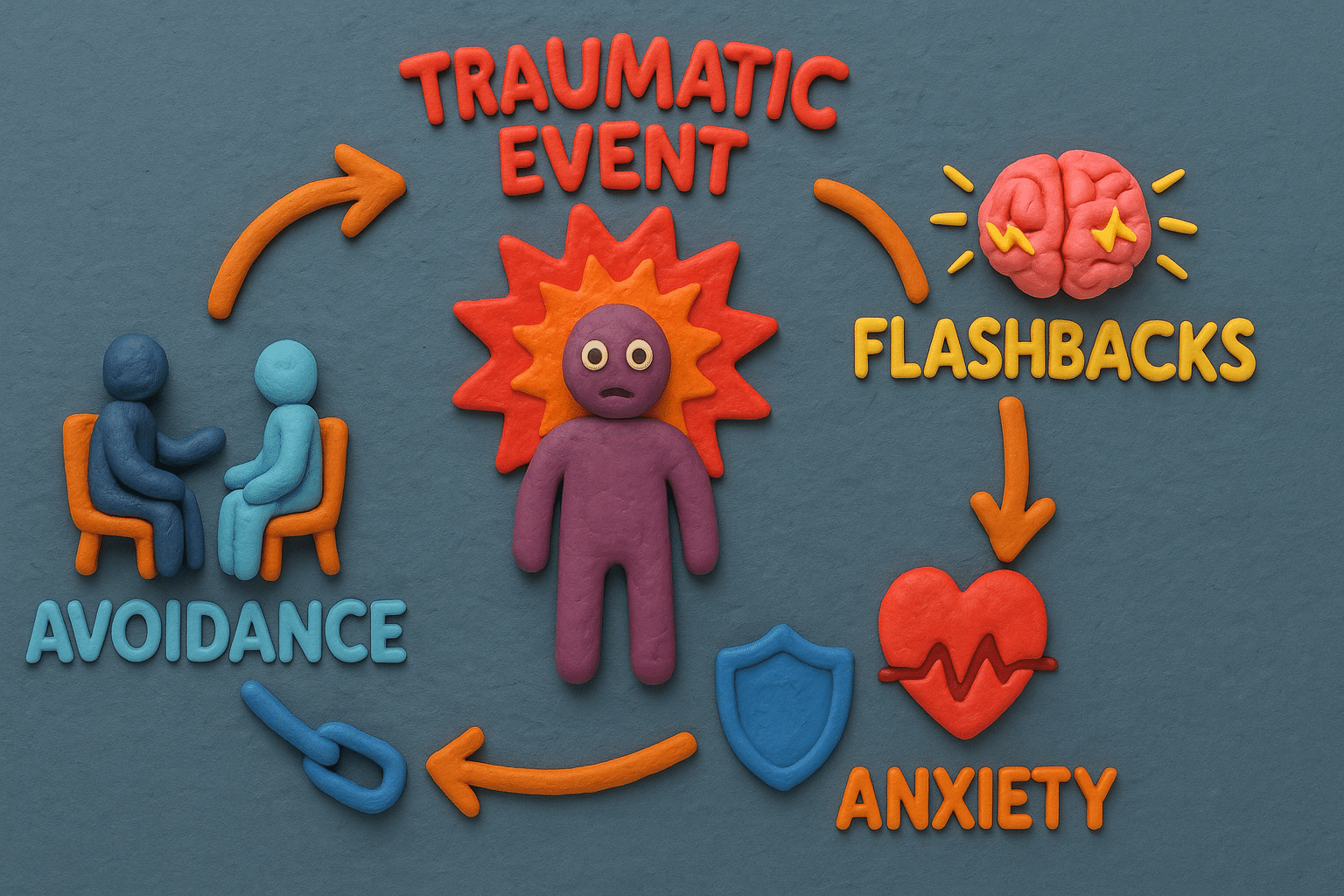
Qualifying for SSDI with PTSD in Virginia starts with recognizing the profound impact this condition has on your life. PTSD isn’t just “stress”—it’s a serious mental health disorder triggered by traumatic events, leading to symptoms like flashbacks, nightmares, severe anxiety, and emotional numbness.
According to the Social Security Administration (SSA), PTSD falls under trauma- and stressor-related disorders in their Blue Book listings. But securing benefits requires proving your condition severely limits your ability to work.
Understanding PTSD as a Qualifying Disability
PTSD develops after exposure to actual or threatened death, serious injury, or violence. Symptoms must persist for at least a month and significantly impair functioning. For SSDI purposes, the SSA evaluates PTSD under Listing 12.15, requiring medical documentation of exposure to trauma, involuntary re-experiencing, avoidance, mood disturbances, and increased arousal.
To qualify, you must show extreme or marked limitations in areas like interacting with others, concentrating, or managing yourself. If your PTSD is “serious and persistent” over two years with ongoing treatment, you may meet alternative criteria. Veterans in Virginia, home to major military bases like Quantico, often combine SSDI with VA benefits for comprehensive support.
SSDI Eligibility Criteria for PTSD Sufferers
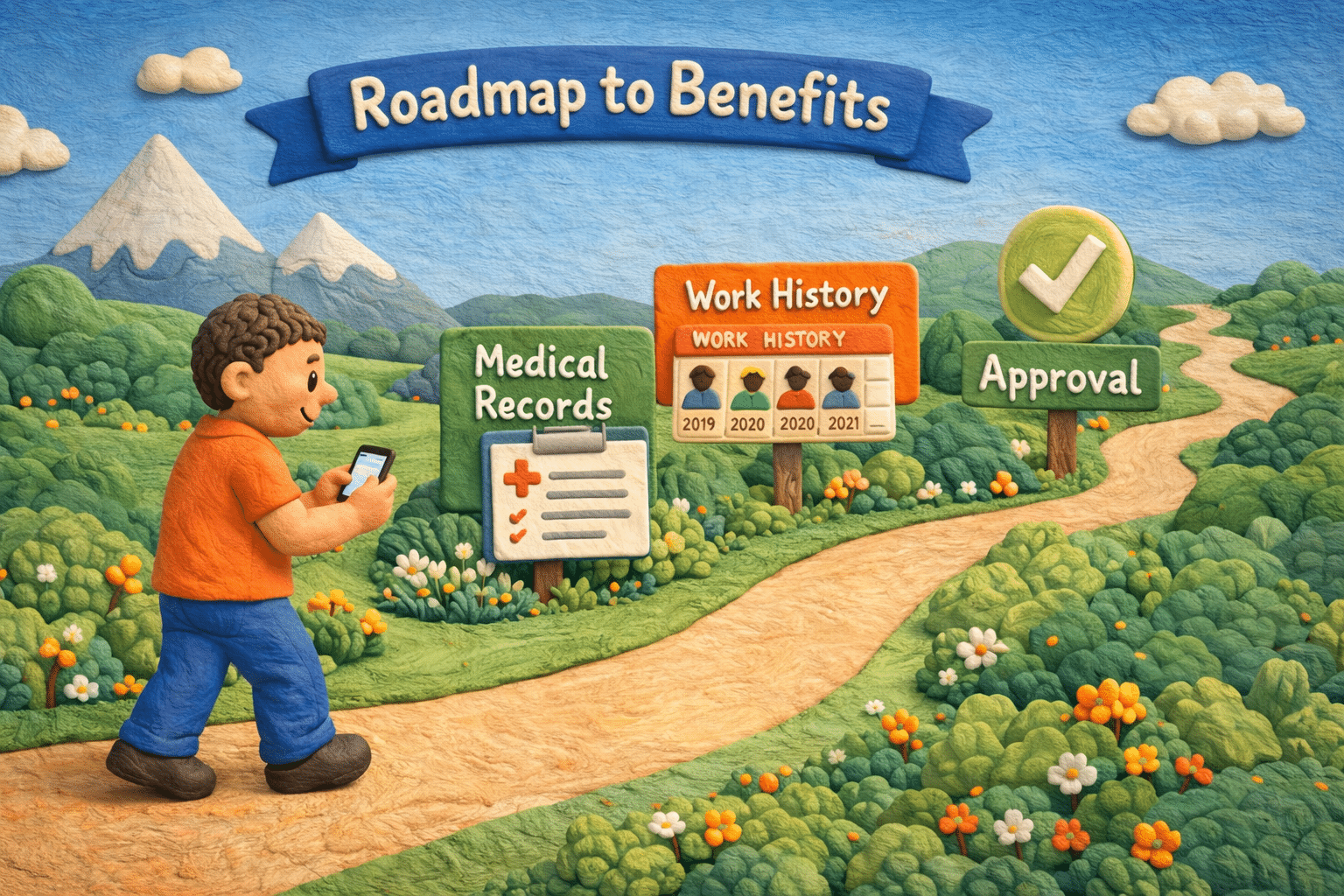
Qualifying for SSDI with PTSD in Virginia demands meeting both medical and non-medical requirements. Medically, your PTSD must prevent substantial gainful activity (SGA)—earning over $1,550 monthly in 2025—for at least 12 months.
Non-medically, you need sufficient work credits: typically 40 credits, with 20 earned in the last 10 years. Younger applicants may need fewer. In Virginia, local SSA offices in cities like Roanoke or Alexandria handle applications, but appeals often go to hearing offices in Richmond.
Key Benefits of SSDI for PTSD in Virginia
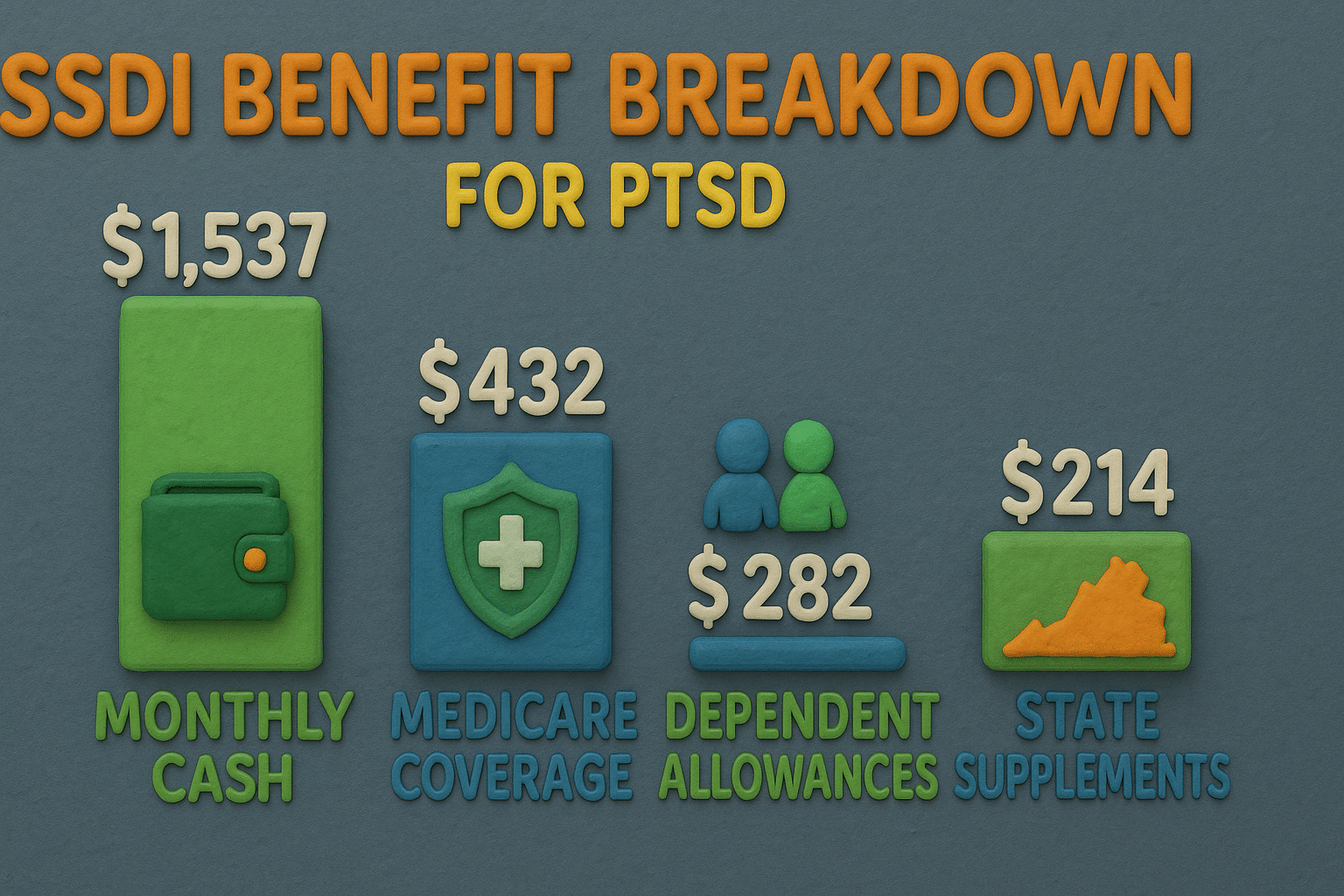
Securing SSDI provides monthly payments averaging $1,537 in 2025, plus Medicare after 24 months. For PTSD sufferers, this means covering therapy, medications, and living expenses without work stress exacerbating symptoms. In Virginia, benefits integrate with state programs like Medicaid for dual eligibility, offering holistic support.
Additional perks include dependent benefits for children and trial work periods to test employment without immediate loss. Neighboring states like North Carolina offer similar integrations, easing expansion for border residents.
Common Reasons for SSDI Denials with PTSD
Denials for qualifying for SSDI with PTSD in Virginia often stem from insufficient medical evidence—lacking detailed records of symptoms and treatments. Other pitfalls include inconsistent treatment, failure to follow prescribed therapy, or not proving work limitations.
Technical issues like inadequate work credits or earning above SGA thresholds also lead to rejections. Mental health claims face scrutiny due to subjective symptoms, with about 65% denied initially nationwide.
7 Powerful Strategies to Overcome Denial Hurdles
1. Gather Comprehensive Medical Evidence: Collect records from therapists, including PTSD diagnoses per DSM-5 criteria and functional assessments.
2. Document Daily Limitations: Use journals or third-party statements to show how PTSD affects work, like concentration lapses or social withdrawal.
3. Seek Consistent Treatment: Regular therapy sessions demonstrate severity; gaps can imply non-disabling condition.
4. Leverage VA Ratings: If service-connected, a high VA PTSD rating (e.g., 70%) strengthens your SSDI case.
5. Prepare for Consultative Exams: Attend SSA-ordered exams prepared to discuss symptoms honestly.
6. File Timely Appeals: Request reconsideration within 60 days; Virginia’s approval rate rises to 15% here.
7. Consult a Specialist: Virginia SSDI attorneys can boost success by 50% at hearings.
For more on SSA criteria, visit SSA’s Blue Book on Mental Disorders.
Step-by-Step SSDI Application Process in Virginia
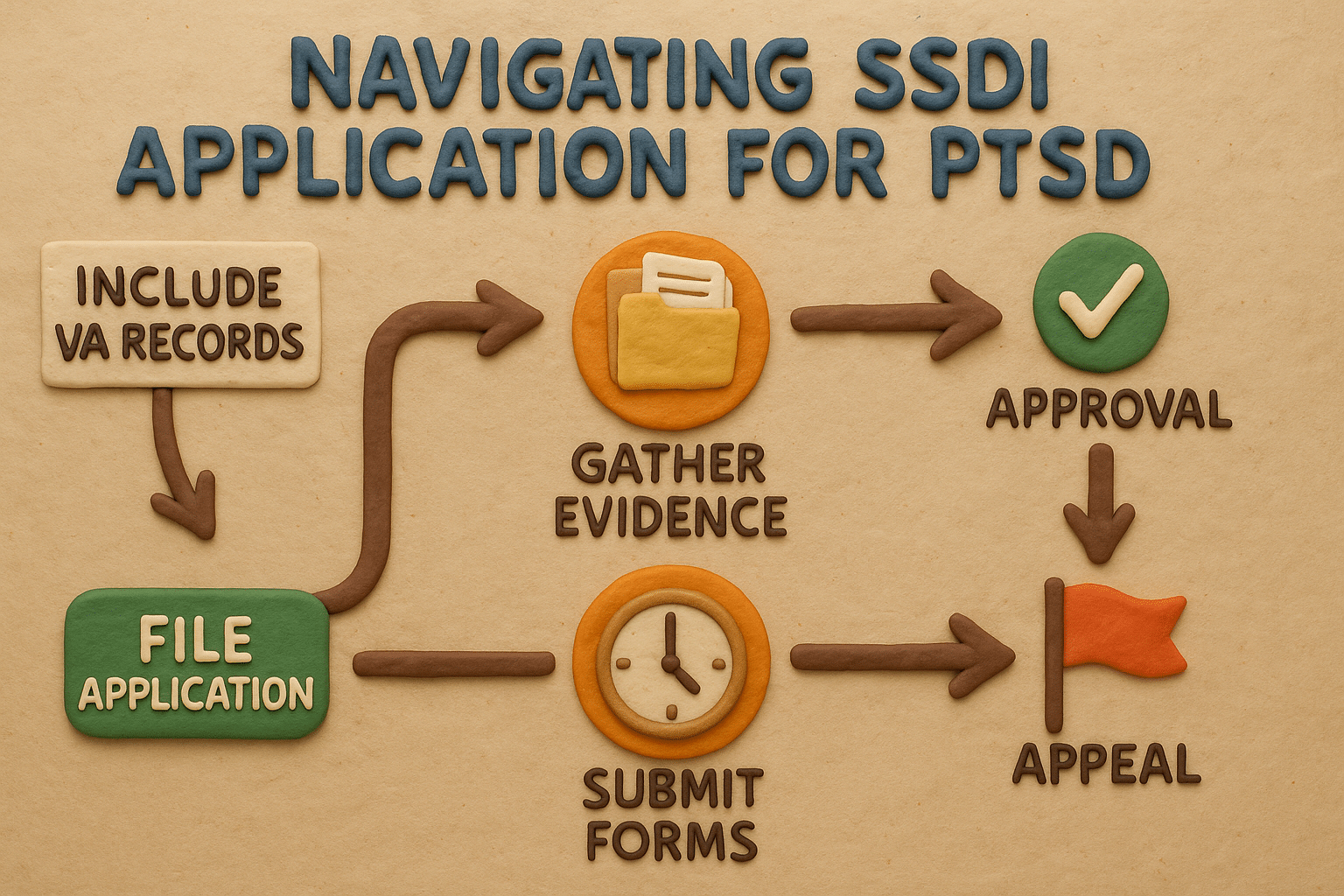
Begin online at SSA.gov or via phone. Submit medical history, work details, and PTSD evidence. Expect a 3-5 month wait; if denied, reconsider in Virginia’s DDS offices.
Navigating the Appeals Process Effectively
If denied, reconsider within 60 days. If still rejected, request a hearing before an ALJ—approval rates jump to 45%. Prepare testimony on PTSD impacts; vocational experts may assess job options.
Appeals Council or federal court follows if needed. In Virginia, hearings occur in Falls Church or Richmond, with waits averaging 12 months.
Virginia-Specific Considerations and Resources
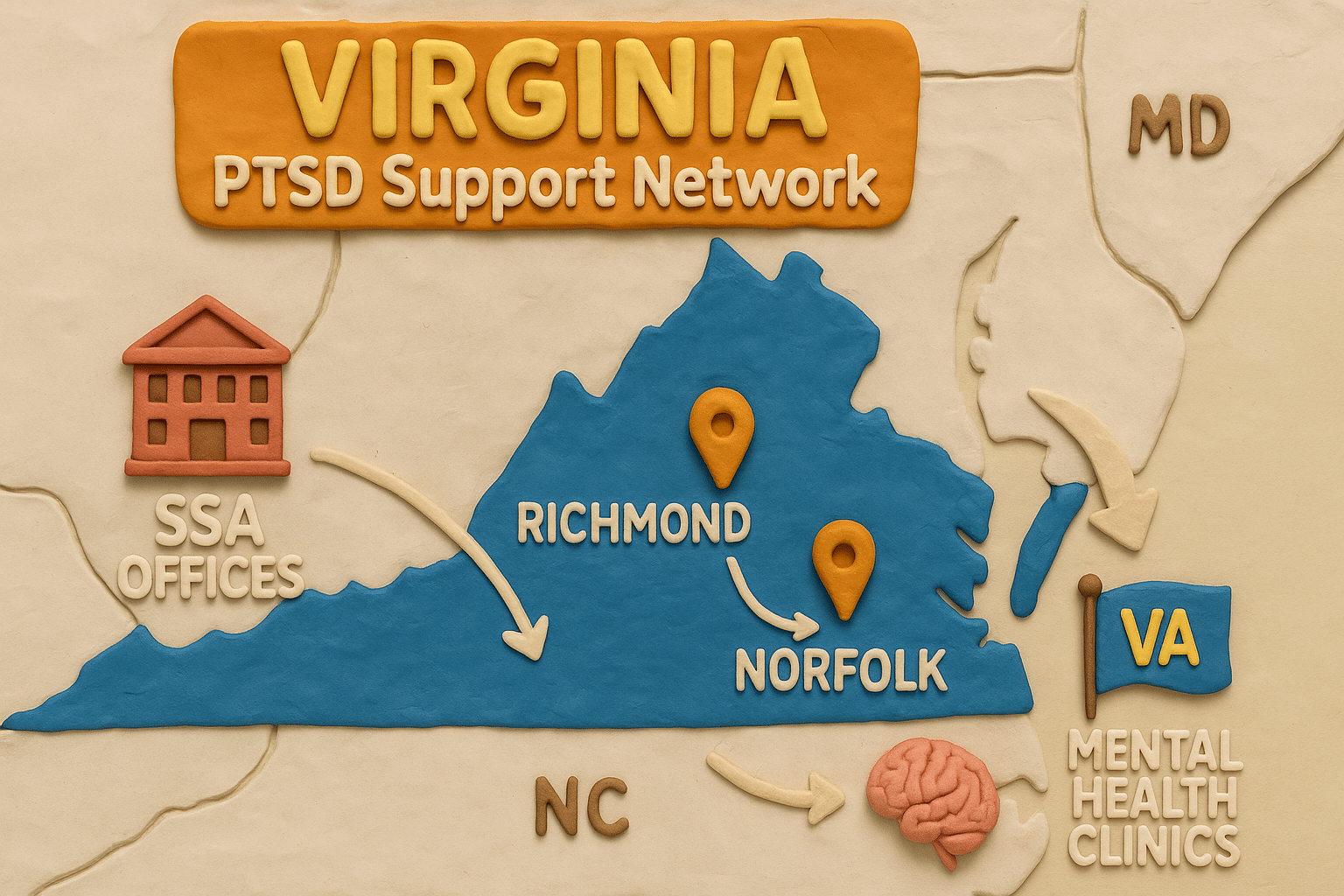
Virginia’s DDS processes claims, considering local job markets. Access resources like the Virginia Department of Veterans Services or community mental health centers in Fairfax or Virginia Beach. For bordering states, reciprocal agreements ease transitions.
When to Seek Expert Legal Help
Complex cases benefit from attorneys experienced in qualifying for SSDI with PTSD in Virginia. They handle paperwork, gather evidence, and represent at hearings—no upfront fees, only if you win.
Watch and Listen: Expand Your Understanding
Deepen your knowledge on qualifying for SSDI with PTSD in Virginia through our multimedia resources. These formats bring the topic to life, offering practical insights beyond text.
Our video breaks down the denial hurdles with real-world examples. It visually demonstrates the application timeline, evidence gathering, and appeal strategies using animated scenarios tailored for Virginians. You’ll see how PTSD symptoms translate to SSA criteria, plus tips from experts on building unbreakable cases. Watching this equips you with confidence to tackle your claim—don’t miss the step-by-step visuals that make complex processes crystal clear.
For those on the go, our podcast delves into personal stories of PTSD sufferers navigating SSDI in Virginia. Listen to expert interviews discussing common pitfalls and success stories, all while multitasking during your commute or daily routine. The audio format allows flexible learning, highlighting nuances like Virginia-specific resources and how to integrate VA benefits. Tune in to gain motivation and actionable advice without pausing your day.
Explore More: Insights into Mental Health SSD Claims
If PTSD is part of a broader mental health journey, expand your knowledge with our previous in-depth exploration. This resource offers complementary strategies to strengthen your claim.
Mental Health SSD Claims: Essential Tips for Success
Frequently Asked Questions
What is the main requirement for qualifying for SSDI with PTSD in Virginia?
You must prove your PTSD severely limits work for at least 12 months, with medical evidence meeting SSA Listing 12.15, plus sufficient work credits.
Why are SSDI claims for PTSD often denied in Virginia?
Common reasons include insufficient evidence, inconsistent treatment, or not demonstrating functional limitations. About 65% are denied initially due to these issues.
Can I receive both VA and SSDI benefits for PTSD?
Yes, many Virginia veterans qualify for both, as VA ratings can support SSDI claims without offsetting each other.
How long does the SSDI appeals process take in Virginia?
Reconsideration takes 3-5 months; hearings average 12 months, but approvals rise significantly at this stage.
What evidence is crucial for PTSD SSDI applications?
Medical records, therapy notes, third-party statements, and functional assessments showing limitations in concentration, social interaction, and self-management.
Are there Virginia-specific resources for PTSD claimants?
Yes, including the Virginia Department of Veterans Services, local SSA offices, and mental health centers in areas like Richmond and Norfolk.
Can PTSD from non-military trauma qualify for SSDI?
Absolutely, as long as it meets SSA criteria—trauma source doesn’t matter, only the impact on functioning.
At Harbison & Kavanagh, we are dedicated to helping you navigate the SSDI application and appeals process. If you believe you qualify for SSDI and have questions, call us today at (804) 888-8000, or visit our contact page to schedule a free consultation. Our experienced lawyers are here to provide the support and guidance you need.
Related Posts