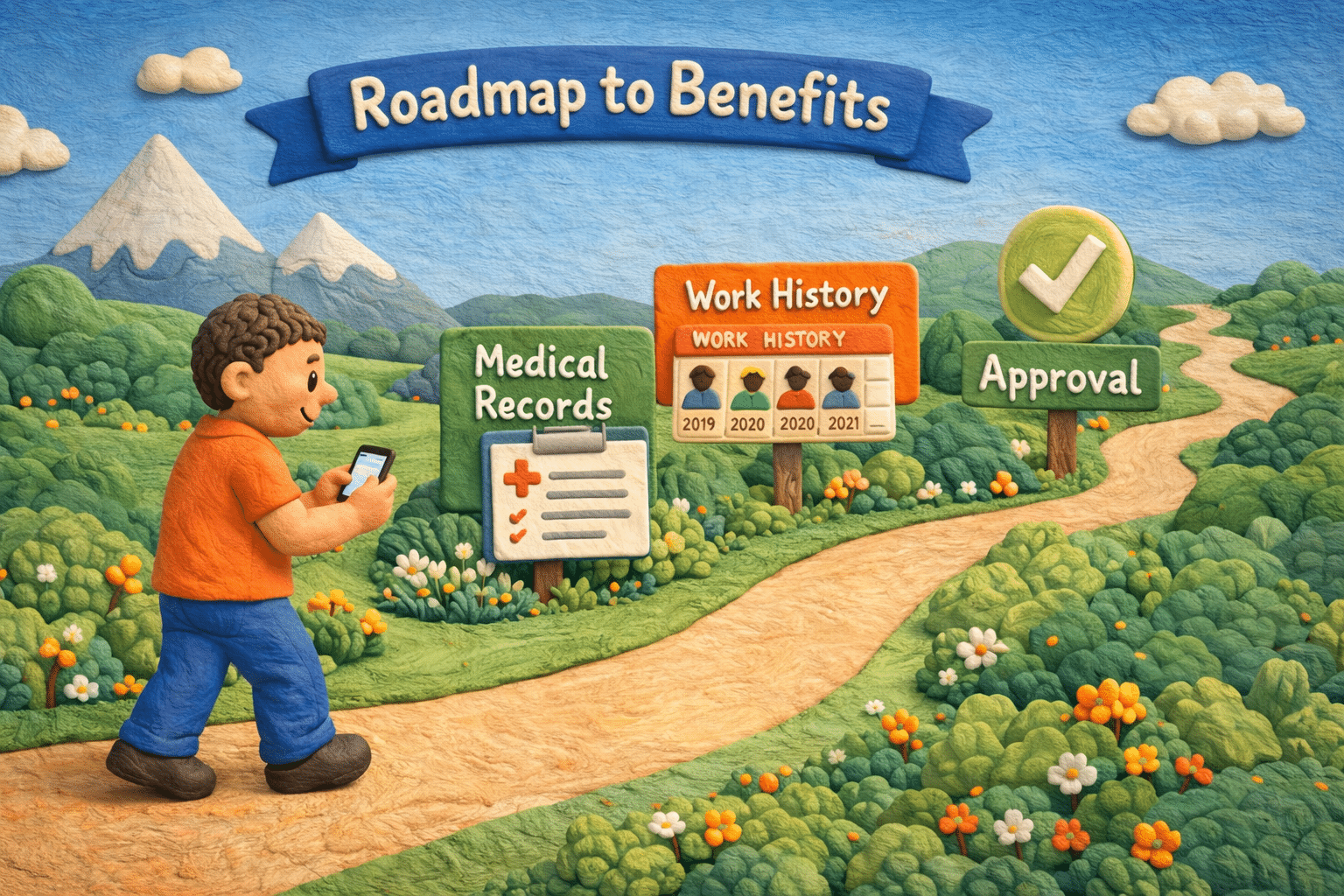
Understanding how the Social Security Administration (SSA) evaluates medical conditions is the first step toward…
Navigating SSD Reconsideration: 5 Proven Tips to Strengthen Your Case
SSD Reconsideration: 5 Proven Tips to Strengthen Your Case and Win Your Appeal
SSD reconsideration represents a critical second chance for individuals whose initial Social Security Disability claims have been denied. This administrative review process offers hope to thousands of Virginia residents who face the challenging reality of a denied disability claim. Understanding how to navigate this complex system effectively can mean the difference between continued financial hardship and receiving the benefits you desperately need.
Table of Contents
- Understanding the SSD Reconsideration Process
- Timing is Everything: Critical Deadlines You Cannot Miss
- Tip #1: Gather Comprehensive Medical Evidence
- Tip #2: Write a Detailed Appeal Letter
- Tip #3: Document Your Functional Limitations
- Tip #4: Highlight Your Work History Impact
- Tip #5: Consider Professional Representation
- Common Mistakes to Avoid During SSD Reconsideration
- Statistical Success Rates and Realistic Expectations
- Watch and Listen: Expand Your Understanding
- Frequently Asked Questions
Understanding the SSD Reconsideration Process
The SSD reconsideration process serves as the first formal appeal level when the Social Security Administration (SSA) denies your initial disability claim. This administrative review involves a complete examination of your case by a different disability examiner who was not involved in the original decision. The Social Security Administration’s appeals process provides multiple opportunities to challenge unfavorable decisions.
During SSD reconsideration, the new examiner reviews all evidence from your original claim file, plus any additional documentation you submit. This fresh perspective can be invaluable, especially when new medical evidence or clearer documentation of your limitations becomes available. The reconsideration process typically takes 3-5 months, though processing times can vary significantly based on your location and the complexity of your case.
Key Elements of the Reconsideration Review
The reconsideration examiner evaluates several critical components of your disability claim. First, they assess whether your medical condition meets or equals the severity criteria outlined in the SSA’s Blue Book of impairments. Second, they determine your residual functional capacity (RFC), which describes what work-related activities you can still perform despite your limitations. Finally, they consider whether you can return to your past work or adjust to other work available in the national economy.
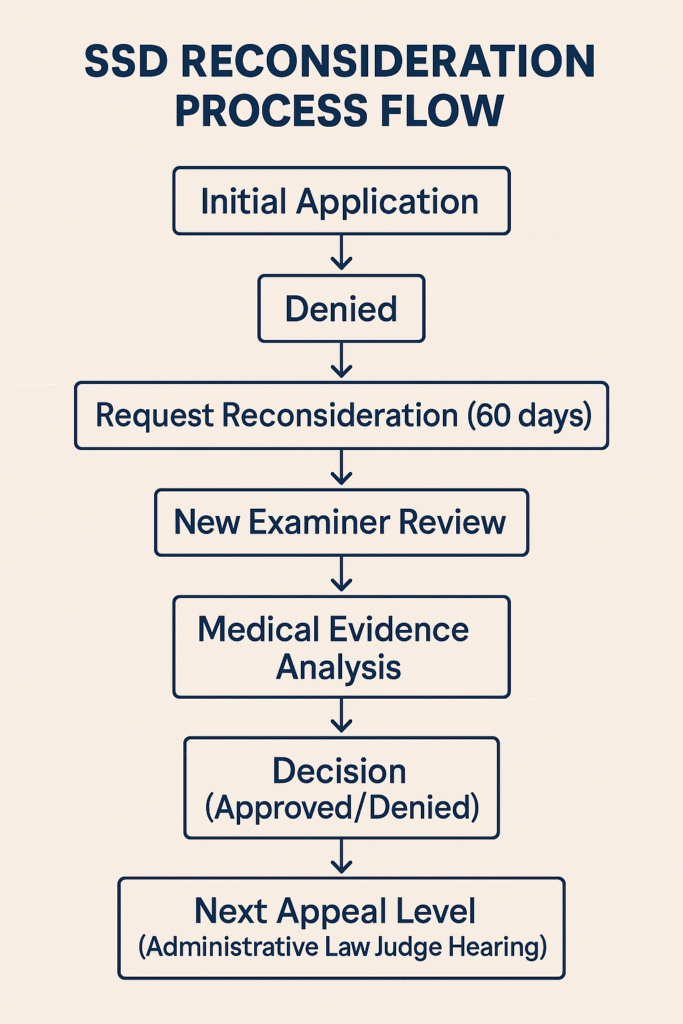
This flowchart illustrates the sequential steps in the SSD reconsideration process, showing how your case moves from initial denial through the reconsideration review. The 60-day deadline is crucial, as missing this window can result in starting the entire process over from the beginning.
Timing is Everything: Critical Deadlines You Cannot Miss
Understanding the strict timing requirements for SSD reconsideration is absolutely essential for preserving your right to appeal. The SSA provides a 60-day window from the date you receive your denial notice to file your reconsideration request. This deadline is not negotiable, and failing to meet it typically requires starting the entire application process from scratch.
The 60-day period begins from the date you receive the denial notice, not from the date it was mailed. The SSA assumes you received the notice five days after the mailing date unless you can prove otherwise. This assumption can create confusion, so it’s crucial to act quickly upon receiving any correspondence from the SSA.
Extensions and Special Circumstances
While the 60-day deadline is firm, certain circumstances may warrant an extension. Good cause for late filing includes serious illness, death in the immediate family, or important records being destroyed or damaged. However, proving good cause requires substantial documentation and should not be relied upon as a backup plan.
Tip #1: Gather Comprehensive Medical Evidence
The foundation of any successful SSD reconsideration lies in presenting comprehensive medical evidence that clearly demonstrates the severity and impact of your condition. Many initial denials occur due to insufficient medical documentation, making this the most critical area for improvement during reconsideration.
Types of Medical Evidence That Strengthen Your Case
Objective medical evidence carries the most weight in SSD reconsideration decisions. This includes diagnostic test results, imaging studies, laboratory findings, and clinical observations from your treating physicians. Subjective evidence, such as pain scales and functional assessments, provides important context but must be supported by objective findings.
Recent medical evidence is particularly valuable, as it demonstrates the ongoing nature of your condition. If significant time has passed since your initial application, new medical records showing continued or worsening symptoms can substantially strengthen your reconsideration request.
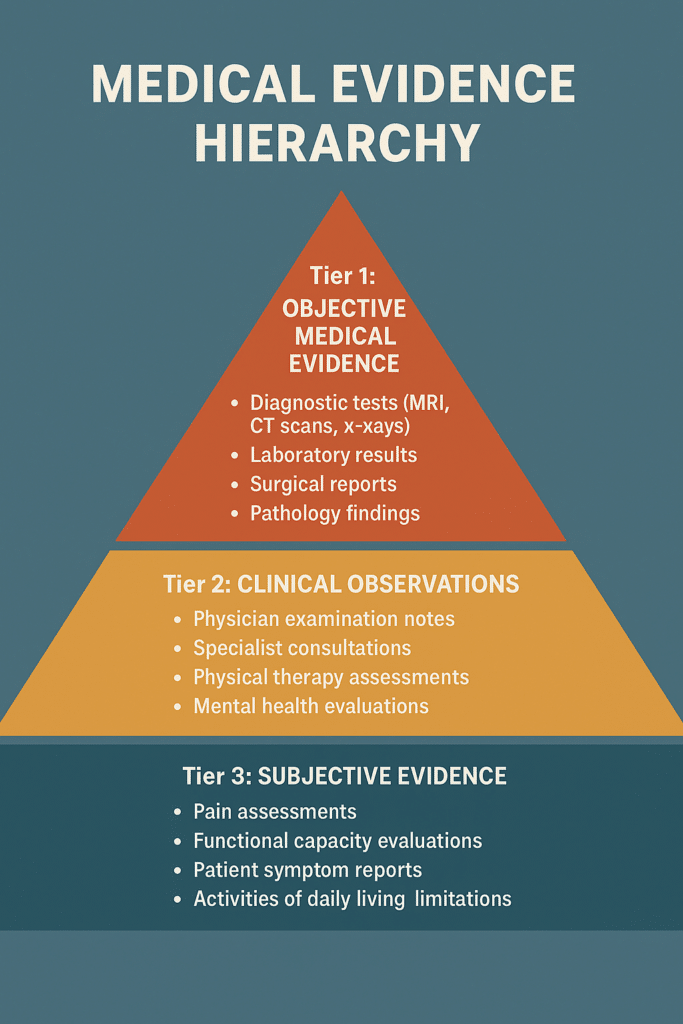
This hierarchy demonstrates how different types of medical evidence are weighted during SSD reconsideration. While all evidence is important, objective medical findings carry the greatest influence in decision-making.
Obtaining Missing Medical Records
During the reconsideration process, you have the opportunity to submit medical records that may have been missing from your initial application. Contact all healthcare providers who have treated your condition, including specialists, hospitals, and mental health professionals. Request complete copies of your medical records, not just summaries.
Tip #2: Write a Detailed Appeal Letter
A well-crafted appeal letter can significantly impact your SSD reconsideration outcome by providing context and highlighting key evidence that supports your claim. This letter should address the specific reasons for your initial denial and explain why the decision was incorrect.
Structure of an Effective Appeal Letter
Your appeal letter should begin with a clear statement of your intent to request reconsideration, including your Social Security number and the date of the denial notice. Follow this with a detailed explanation of how your condition prevents you from working, using specific examples from your daily life.
Address each reason given for your initial denial directly. If the denial stated insufficient medical evidence, explain what additional documentation you’re providing. If the denial suggested you could perform your past work, describe specifically why this is not possible given your current limitations.
Key Elements to Include
Describe your symptoms in detail, including their frequency, duration, and impact on your ability to function. Use specific examples rather than general statements. Instead of saying “I have pain,” explain “I experience sharp, stabbing pain in my lower back that radiates down my left leg, occurring 8-10 times daily and lasting 15-30 minutes each episode.”
Include information about your treatment history, medications, and their side effects. Explain how your condition has progressed since your initial application and describe any new symptoms or limitations that have developed.
Tip #3: Document Your Functional Limitations
Successful SSD reconsideration cases often hinge on clearly demonstrating how your medical condition translates into functional limitations that prevent you from working. The SSA evaluates your ability to perform basic work activities, including sitting, standing, walking, lifting, carrying, and concentrating.
Physical Functional Limitations
Document your physical limitations with specific measurements and timeframes. For example, if you can only stand for 10 minutes before experiencing severe pain, obtain documentation from your physician confirming this limitation. If you can only lift 5 pounds due to shoulder problems, ensure your medical records reflect this restriction.
Consider how your condition affects your ability to perform sustained work activities. The SSA evaluates whether you can maintain consistent performance over an 8-hour workday, 5 days per week. Fluctuating symptoms or the need for frequent breaks can be particularly disabling factors.
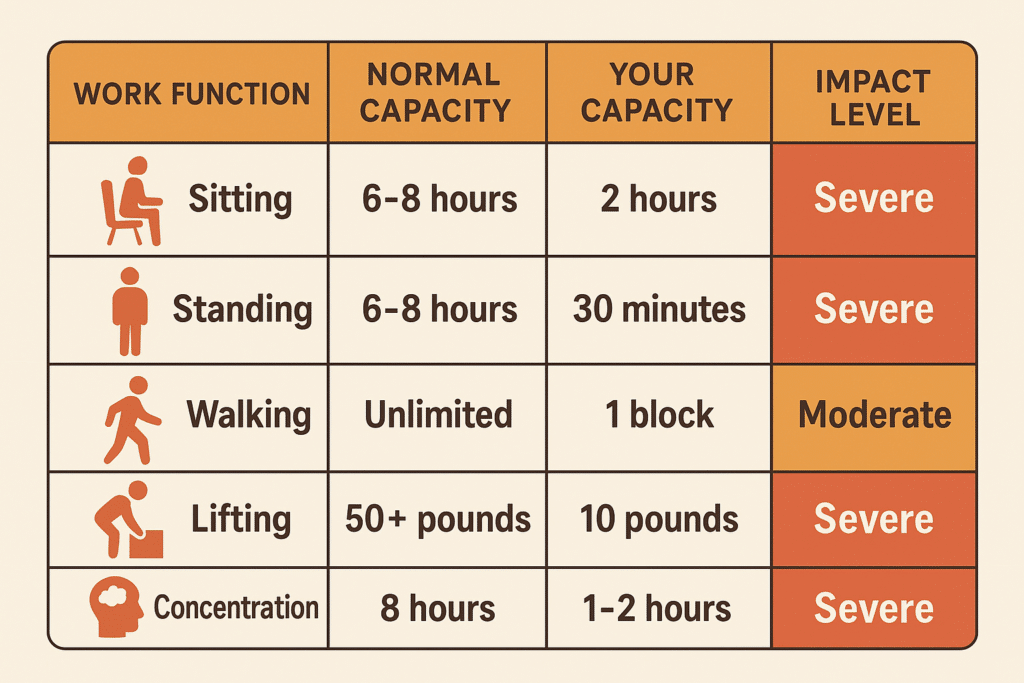
This assessment grid helps visualize the gap between normal work capacity and your actual functional abilities during SSD reconsideration. The “Impact Level” column helps demonstrate the severity of your limitations.
Mental Functional Limitations
Mental health conditions require careful documentation of how symptoms affect your ability to understand, remember, and carry out instructions. Document difficulties with concentration, memory, social interaction, and adapting to workplace changes.
Provide specific examples of how your mental health condition affects your daily activities. Describe incidents where you forgot important appointments, had difficulty following multi-step instructions, or experienced panic attacks in social situations.
Tip #4: Highlight Your Work History Impact
Your work history plays a crucial role in SSD reconsideration decisions, as the SSA must determine whether you can return to your past relevant work or adjust to other work in the national economy. Understanding how to present your work history effectively can significantly strengthen your case.
Relevant Work History Analysis
The SSA considers work “relevant” if you performed it within the 15 years before your disability began and if it lasted long enough for you to learn the job (typically 30 days for simple jobs, up to 6 months for complex positions). Focus on jobs that best demonstrate your previous skill level and physical demands.
Provide detailed job descriptions that go beyond basic titles. Explain the specific physical and mental demands of each position, including lifting requirements, standing/sitting time, concentration needs, and interpersonal interactions. This information helps the examiner understand why your current limitations prevent you from returning to this work.
Transferable Skills Assessment
If you cannot return to your past work, the SSA evaluates whether you have transferable skills that would allow you to perform other jobs. However, this analysis becomes more favorable to claimants as age increases, with special rules applying at ages 50, 55, and 60.
Document any specialized training, certifications, or unique skills you developed during your career. Sometimes, highlighting the specialized nature of your work history can demonstrate that your skills don’t transfer to lighter, less demanding positions.
Tip #5: Consider Professional Representation
While not required, professional representation can significantly improve your chances of success during SSD reconsideration. Experienced disability attorneys understand the complex regulations, know what evidence is most persuasive, and can identify weaknesses in the initial denial decision.
Benefits of Professional Representation
Disability attorneys work on a contingency fee basis, meaning you pay nothing unless your case is successful. This arrangement aligns your attorney’s interests with yours and makes professional representation accessible regardless of your current financial situation.
Attorneys have access to medical and vocational experts who can provide opinions supporting your claim. They also understand the specific documentation requirements and can help ensure your reconsideration request is complete and persuasive.
When to Seek Representation
Consider seeking representation immediately after receiving your initial denial, especially if your case involves complex medical conditions, mental health issues, or if you’re unsure about the denial reasons. Early representation allows your attorney to develop a comprehensive strategy for your reconsideration.
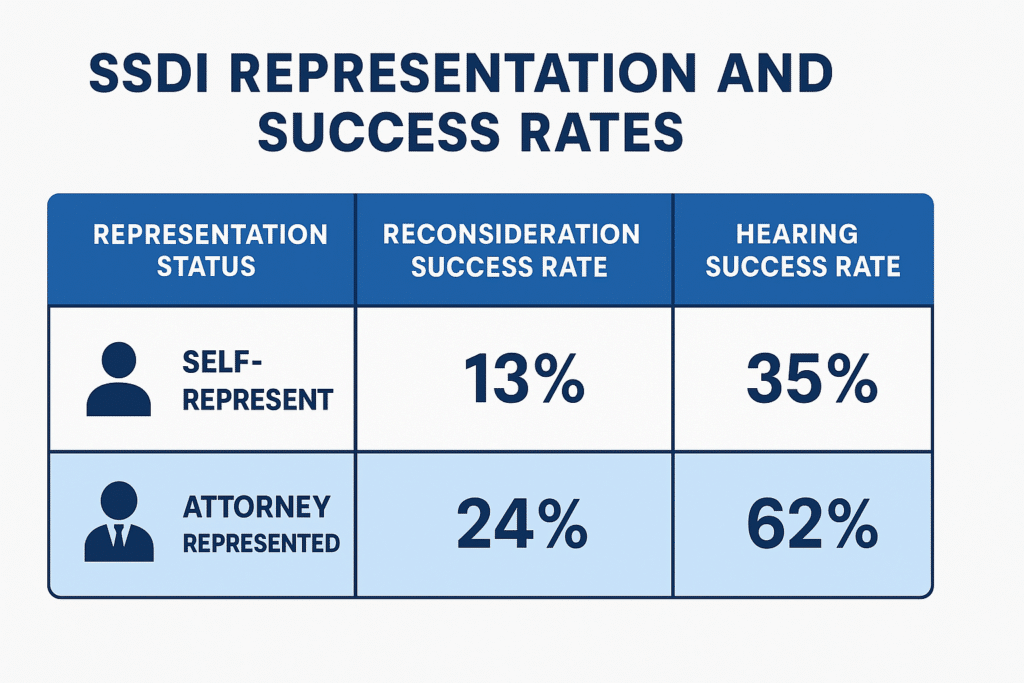
This comparison illustrates the significant impact professional representation can have on SSD reconsideration outcomes. While success rates vary by case complexity and individual circumstances, representation consistently improves approval chances.
Common Mistakes to Avoid During SSD Reconsideration
Understanding common pitfalls in the SSD reconsideration process can help you avoid critical errors that could jeopardize your case. Many claimants make preventable mistakes that significantly reduce their chances of approval.
Insufficient New Evidence
One of the most common mistakes is submitting a reconsideration request without providing substantial new evidence. Simply resubmitting the same information that led to your initial denial is unlikely to produce a different result. The reconsideration examiner needs compelling reasons to reach a different conclusion than the initial examiner.
Inconsistent Information
Inconsistencies between your initial application and reconsideration materials can raise red flags and damage your credibility. Ensure that all information is consistent and that any changes reflect legitimate developments in your condition rather than contradictory statements.
Missing Deadlines
Beyond the 60-day deadline for requesting reconsideration, there are ongoing deadlines for submitting additional evidence and responding to SSA requests. Missing these deadlines can result in decisions being made without crucial information.
Inadequate Medical Treatment
Failing to follow prescribed treatment or having significant gaps in medical care can negatively impact your SSD reconsideration. The SSA expects claimants to seek appropriate treatment for their conditions. If you cannot afford treatment or have legitimate reasons for not following prescribed care, document these circumstances clearly.
Statistical Success Rates and Realistic Expectations
Understanding the statistical reality of SSD reconsideration success rates helps set realistic expectations and underscores the importance of thorough preparation. National statistics show that approximately 13-15% of reconsideration requests result in approval, making this the most challenging stage of the appeals process.
Factors Affecting Success Rates
Several factors influence your likelihood of success during SSD reconsideration. Cases involving severe, well-documented medical conditions with clear objective evidence tend to have higher approval rates. Mental health conditions, pain-based disabilities, and conditions with primarily subjective symptoms face additional challenges.
Age also plays a significant role, with older claimants having higher success rates due to the SSA’s grid rules that consider age as a vocational factor. Claimants approaching age 50 or older may find it easier to demonstrate inability to adjust to other work.
Preparing for Potential Denial
Given the low success rates, it’s important to prepare for the possibility that your SSD reconsideration may also be denied. This preparation includes understanding the next appeal level (Administrative Law Judge hearing) and continuing to gather evidence that will strengthen your case at that level.
The hearing level has significantly higher success rates (approximately 47% nationally), making it important to view reconsideration as one step in a longer process rather than your final opportunity.
Watch and Listen: Expand Your Understanding
Enhance your knowledge of the SSD reconsideration process through our comprehensive podcast series. These audio resources provide detailed insights from experienced disability attorneys and can be conveniently accessed while you’re managing other daily activities. Our experts break down complex legal concepts into understandable guidance, sharing real-world examples and practical strategies that can strengthen your case. Whether you’re commuting, exercising, or simply prefer audio learning, these podcasts offer valuable perspectives on navigating the challenging reconsideration process effectively.
Frequently Asked Questions
How long does the SSD reconsideration process take?
The SSD reconsideration process typically takes 3-5 months from the date you submit your request. However, processing times can vary significantly based on your location, the complexity of your case, and the current workload of the processing office.
Can I submit new medical evidence during reconsideration?
Yes, you can and should submit new medical evidence during SSD reconsideration. In fact, providing additional evidence that wasn’t available during your initial application is often crucial for achieving a different outcome.
What happens if my reconsideration is denied?
If your SSD reconsideration is denied, you have 60 days to request a hearing before an Administrative Law Judge (ALJ). This is the next level of appeal and has significantly higher success rates than reconsideration.
Do I need a lawyer for SSD reconsideration?
While not required, having legal representation can significantly improve your chances of success during SSD reconsideration. Attorneys work on contingency, so you pay nothing unless your case is successful.
Can I work while my reconsideration is pending?
You can work while your SSD reconsideration is pending, but any work activity must remain below the substantial gainful activity (SGA) limit. Working above this limit can negatively impact your case.
What is the difference between reconsideration and appeal?
SSD reconsideration is actually the first level of appeal in the SSA’s appeals process. The term “appeal” encompasses all levels of review, including reconsideration, Administrative Law Judge hearings, Appeals Council review, and federal court review.
Strengthen Your Case with Expert Guidance
The SSD reconsideration process represents a critical opportunity to present your case more effectively and achieve the benefits you deserve. By implementing these five proven strategies and avoiding common pitfalls, you can significantly improve your chances of success during this challenging phase of the appeals process.
For additional insights into strengthening your disability claim, explore our comprehensive guide on Key Evidence to Strengthen Your SSD Appeal: 7 Powerful Tactics for a Winning Claim. This resource provides detailed strategies for gathering and presenting the most compelling evidence to support your disability claim throughout the appeals process.
At Harbison & Kavanagh, we are dedicated to helping you navigate the SSDI application and appeals process. If you believe you qualify for SSDI and have questions, call us today at (804) 888-8000, or visit our contact page to schedule a free consultation. Our experienced lawyers are here to provide the support and guidance you need.
Related Posts